 Logistics in Tech
Decimal Solution · Oct 21, 2026
Smart Moves: How Tech Is Redefining Logistics
Discover how digital transformation is revolutionizing logistics with smarter tracking, automation, and efficiency by Decimal Solution.
Read article



Engineering
Talha Atiq · October 21, 2026
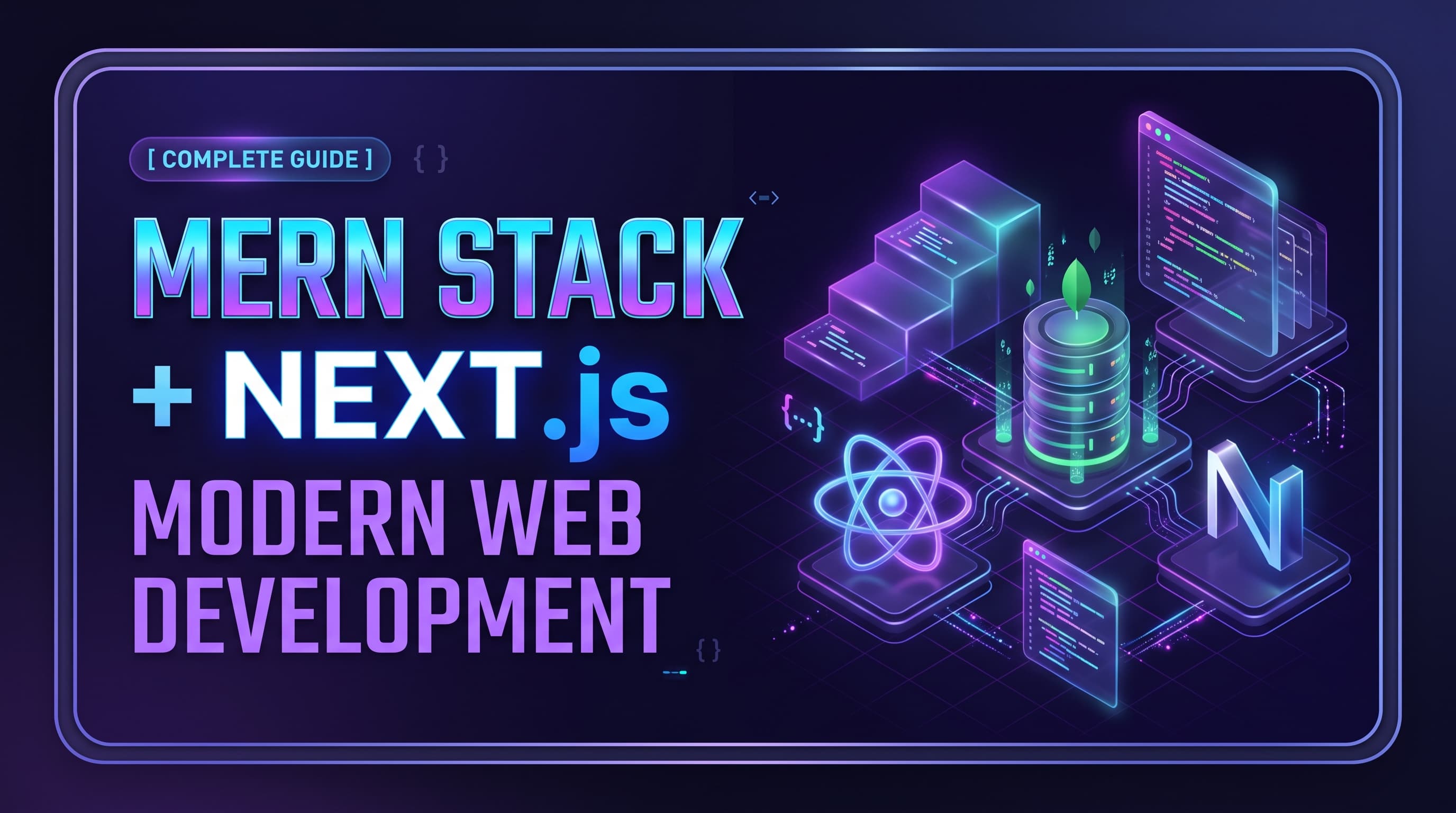
If you’re diving into web development, you’ve probably heard about MERN stack and Next.js. But what are they, and why should you care? MERN stack composed of MongoDB, Express.js, React, and Node.js, offers a powerful combination for building dynamic web applications. Adding Next.js enhances your development process, making it easier to create high-performance, user-friendly applications.
In this article, we’ll explore MERN stack, Next.js, their integration, and how they can benefit your projects. Here’s what you’ll learn in this article:
Key Topics Covered
MERN stack is a widely used framework for developing web applications. It includes:
MongoDB: A NoSQL database that stores data in flexible, JSON-like documents.
Express.js: A web application framework for Node.js, simplifying server-side development.
React: A front-end library for building user interfaces with reusable UI components.
Node.js: A runtime environment for executing JavaScript on the server side.
These technologies work together to create a full-stack JavaScript environment that’s efficient and easy to work with, making MERN stack a popular choice for web developers.
Next.js is a powerful framework built on top of React. It adds features that make building web applications faster and more efficient, such as:
Server-side Rendering (SSR): Pages are rendered on the server, which boosts performance and enhances SEO.
Static Site Generation (SSG): Pages can be pre-rendered at build time, improving load times.
API Routes: Next.js allows you to create API endpoints directly within your application, streamlining back-end integration.
Next.js is a great choice for developers because it offers a wide range of benefits:
Improved Performance: Features like SSR and SSG ensure faster page loads, providing a better user experience.
SEO Benefits: With pre-rendering and server-side rendering, Next.js helps improve your website’s visibility on search engines.
Simplified Development: The framework comes with built-in features, reducing the need for additional tools and libraries.
Next.js was developed by Vercel, a company known for providing deployment and hosting solutions. Vercel’s platform is built specifically to support Next.js applications, making it easy to deploy and manage projects.
Here’s why this connection is important:
Seamless Integration: Next.js integrates effortlessly with Vercel, allowing you to deploy your app in just a few clicks. Vercel handles scaling, performance optimization, and deployment for you.
Extensive Support: Vercel offers excellent documentation, support, and an active community for Next.js, helping developers solve problems faster.
Performance Optimization: Vercel ensures your application runs at its best by offering serverless functions, edge caching, and global content delivery.
When you combine MERN stack with Next.js, you create a powerful setup for building modern web applications. Here’s how they work together:
Backend with MERN: Use Node.js and Express to handle server-side logic and MongoDB for database management.
Frontend with Next.js: Develop your user interface with React and take advantage of Next.js features like SSR and SSG for a smoother, faster application.
This combination offers a robust environment for building applications that are fast, scalable, and efficient.
Here are some of the reasons why developers opt for MERN stack combined with Next.js:
Better Performance: Next.js’s server-side rendering improves your app’s speed and responsiveness.
SEO-Friendly: Pre-rendered pages are easier for search engines to index, which can improve your search rankings.
Improved Development Experience: The integration of MERN stack and Next.js simplifies the development process, allowing for faster builds and deployments.
Flexible and Reliable: Whether you're building a small project or a large enterprise-level application, the combination of MERN and Next.js supports a wide range of use cases.
Strong Community and Resources: Both MERN and Next.js are backed by active developer communities, providing extensive resources, tutorials, and troubleshooting support.
In summary, using MERN stack with Next.js offers a powerful toolkit for modern web development. Whether you’re building a simple website or a complex web application, this combination provides the tools and features you need to succeed. With Next.js’s performance enhancements and Vercel’s seamless hosting platform, your projects are set up for success.
MERN stack consists of MongoDB, Express.js, React, and Node.js.
Next.js improves performance and SEO through features like server-side rendering and static site generation.
Yes, MERN stack is highly flexible, making it suitable for large applications.
Server-side rendering means rendering web pages on the server rather than in the browser, resulting in faster page load times.
Yes, Next.js is beginner-friendly, especially for those already familiar with React.
Logistics in TechDecimal Solution · Oct 21, 2026
Discover how digital transformation is revolutionizing logistics with smarter tracking, automation, and efficiency by Decimal Solution.
Read article Artificial Intelligence & Business Intelligence
Abdul Mannan · Oct 21, 2026
Grok AI clarity meets Decimal Solution insights to deliver real-time AI analysis and ultra-fast business intelligence for smarter decisions.
Read article AITech
Decimal Solution · Oct 21, 2026
OpenAI partners with Broadcom to produce 10 gigawatts of AI chips, taking a big step toward building its own hardware and reducing dependence on Nvidia and AMD.
Read article EHR History & Evolution
Talha Atiq · Oct 21, 2026
Discover the most popular EHR systems in the 90s. Learn how electronic health records shaped healthcare and evolved from their early days into modern systems.
Read articleLet's Build
From concept to launch, we handle every layer of your product. Tell us what you're building.