Introduction: A New Chapter in OpenAI’s Hardware Strategy
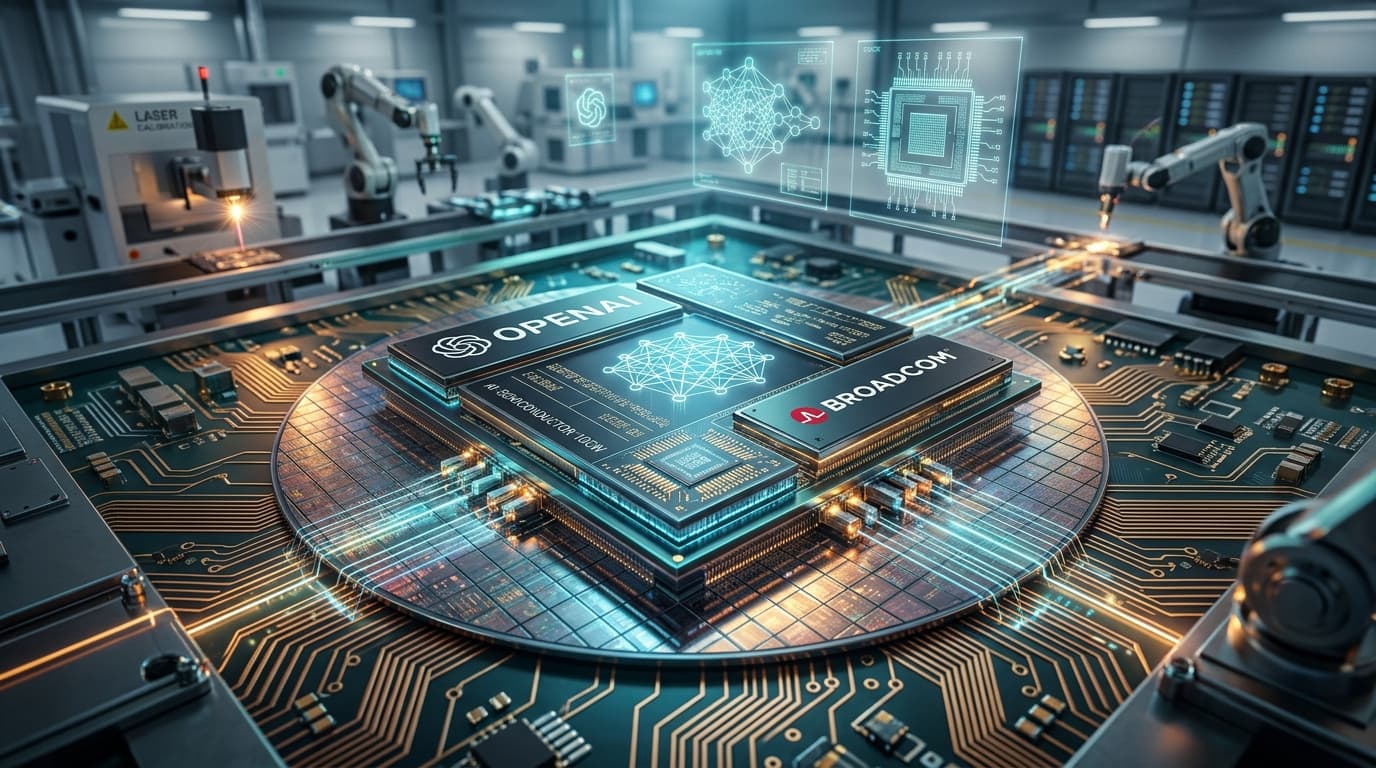
OpenAI has announced a major partnership with Broadcom to produce 10 gigawatts of AI semiconductors, marking an important milestone in its goal to design and manage its own hardware.
This agreement shows how serious OpenAI is about strengthening its technical foundation. Until now, the company has relied heavily on chips from Nvidia and AMD. But with this new deal, it’s starting to take control of the technology that powers its massive AI systems. The announcement also pushed Broadcom’s market value up by more than $150 billion, reflecting just how significant this move is for the industry.
The Deal at a Glance
The partnership combines OpenAI’s design expertise with Broadcom’s manufacturing strength. OpenAI will focus on designing the chips to match its growing AI models, while Broadcom will handle large-scale production.
This setup helps OpenAI secure a steady supply of chips at a time when demand for AI hardware is skyrocketing. It also gives the company more flexibility to improve performance and reduce the cost of running its powerful systems.
Why OpenAI Is Designing Its Own Chips
There are several reasons behind this move.
First, OpenAI wants to depend less on external suppliers like Nvidia, whose GPUs are in high demand and often expensive. Second, by building its own chips, OpenAI can fine-tune performance for its unique workloads, like training massive language and image models.
Designing custom hardware also helps OpenAI plan for long-term growth and avoid shortages that could slow down innovation. In short, it’s about having more control over how and when its technology evolves.
Broadcom’s Role in the Partnership
Broadcom will play a key role by producing the chips designed by OpenAI. The company is already a major player in the semiconductor industry, with the capability to handle large production volumes and deliver high-performance components.
Although Broadcom has not confirmed whether OpenAI is its $10 billion “mystery customer” mentioned earlier this year, the timing of this deal makes it a strong possibility.
What “Chip Independence” Means for OpenAI
Chip independence is a big step for OpenAI because it means the company can control its entire AI pipeline from software and data to the hardware that runs it.
This independence brings several advantages:
Better coordination between AI software and hardware.
Less reliance on global chip suppliers.
Improved speed when developing and deploying new AI models.
It also positions OpenAI to handle the growing demand for computing power as AI continues to expand across every industry.
Impact on the Semiconductor Industry
The partnership has caught the attention of the global chip market. If OpenAI succeeds in developing its own processors, it could reduce its future dependence on Nvidia, which currently dominates AI hardware.
Other companies like AMD and Intel may also feel the ripple effect, as more AI firms look to create their own hardware solutions. Investors are already taking notice, with Broadcom’s stock seeing one of its biggest jumps in recent years after the news broke.
The Future of AI Hardware Innovation
This move fits a growing pattern in the tech industry. Big technology companies including Google (with TPU) and Amazon (with Trainium) have already begun creating their own AI chips to boost performance and efficiency.
OpenAI joining this trend signals that hardware innovation is now just as important as software development in the AI race. In the coming years, we can expect more companies to follow this direction as they look for ways to manage cost, power, and performance at a global scale.
Conclusion: Building the Brains Behind the AI Boom
OpenAI’s partnership with Broadcom represents more than a business deal; it's a strategic move to control the hardware that powers its technology. By designing its own chips, OpenAI is building the foundation for faster, more reliable, and scalable AI systems.
This step brings OpenAI closer to becoming a fully self-sufficient AI company, one that not only creates intelligent software but also designs the hardware that helps it think.
FAQs
1. Why did OpenAI choose Broadcom for its chip deal?
Broadcom has the production capacity and expertise needed to bring OpenAI’s chip designs to life efficiently and at scale.
2. Will OpenAI stop using Nvidia and AMD chips?
Not yet. OpenAI will continue working with existing suppliers while testing and integrating its custom chips over time.
3. What does “10 gigawatts of AI chips” mean?
It refers to the total power capacity of the chips Broadcom will produce enough to support OpenAI’s global AI infrastructure.
4. How could this affect Nvidia and other chip makers?
Nvidia may face increased competition as more AI companies begin creating their own chips, but it will likely remain a major player in the near term.
5. What’s next for OpenAI’s hardware strategy?
OpenAI may deepen its collaboration with Broadcom, focus on chip energy efficiency, and expand its in-house hardware development in the future.
Get in Touch With Us!
Let us assist you in finding practical opportunities among challenges and realizing your dreams.
linkedin.com/in/decimal-solution — LinkedIn
thedecimalsolution@gmail.com — Email




 Biotech & Mobile App Development