Artificial intelligence has moved far beyond the stage where businesses could simply call it an emerging technology. In 2026, AI is increasingly becoming part of the infrastructure through which modern companies build software, manage data, secure systems, communicate with customers, automate operations, and make strategic decisions. The transformation is particularly visible in the IT industry, because technology companies are both the creators and the earliest large-scale users of AI. Software development teams are using AI to accelerate coding and testing, cybersecurity teams are using it to identify suspicious activity, cloud teams are using intelligent systems to optimize infrastructure, and business leaders are increasingly looking at AI as a way to create new products rather than merely reduce costs.
The numbers show why this shift deserves attention. McKinsey's 2025 global survey reported that 88% of respondents said their organizations were using AI in at least one business function, up from 78% in 2024, although only 7% said AI had been fully scaled across their organizations. That gap is important: AI adoption is becoming widespread, but genuine transformation is still relatively early. PwC's 2026 Global AI Jobs Barometer also found that companies in the most AI-exposed sectors recorded 34% productivity growth relative to 2018, compared with 24% among the least AI-exposed companies. So the real question is no longer whether AI can make technology work faster. The more interesting question is how intelligently businesses can integrate AI into the way they operate, innovate, and grow.
The IT Industry Is Entering an AI-First Era
Every major technology shift changes the way IT companies think about their products. The internet changed distribution. Cloud computing changed infrastructure. Mobile computing changed how people interacted with software. AI is now changing something even deeper: the way software itself is created and used. A traditional application waits for users to interact with predefined screens and workflows. An AI-enabled application can interpret natural language, recognize patterns, generate content, make recommendations, and increasingly perform multi-step tasks.
Stanford's 2026 AI Index describes AI capability as continuing to accelerate rather than plateauing, with industry producing more than 90% of notable frontier models in 2025. The report also highlights increasingly capable models across areas such as scientific reasoning, multimodal tasks, and mathematics. This matters for IT businesses because improvements in foundational AI models are rapidly becoming building blocks for commercial products.
Instead of developing every intelligent capability from scratch, software companies can increasingly connect AI models with their own applications, databases, APIs, business rules, and workflows. That creates an entirely different development philosophy. The application is no longer simply a collection of screens and backend functions. It can become an intelligent environment that understands context and helps users accomplish outcomes.
AI Is Turning Productivity Into a Competitive Advantage
Productivity has always mattered in IT, but AI is changing the scale at which productivity can be improved. A developer who previously spent hours creating repetitive code can use AI to generate an initial implementation. A QA engineer can use AI to create test cases. A technical writer can turn development notes into documentation. A project manager can summarize meetings and convert discussions into action items. A cybersecurity analyst can use AI to prioritize alerts and investigate patterns across large amounts of security data.
The important point is that AI does not have to complete an entire job to create meaningful value. If it removes 20 minutes from dozens of repetitive tasks every day, the cumulative effect across a team can become substantial. This is particularly relevant in IT because many workflows contain repetitive cognitive work: searching documentation, writing boilerplate code, analyzing logs, preparing reports, categorizing tickets, creating test scenarios, and responding to common support requests.
PwC's 2025 AI Jobs Barometer found that industries more exposed to AI recorded 27% growth in revenue per employee, compared with 9% in less-exposed industries. The research also found that AI-skilled workers received a significant wage premium. The lesson for IT companies is not simply “automate more.” It is to redesign work so that employees spend less time on low-value repetition and more time on architecture, problem-solving, creativity, strategy, and customer outcomes.
From Software Development to AI-Augmented Development
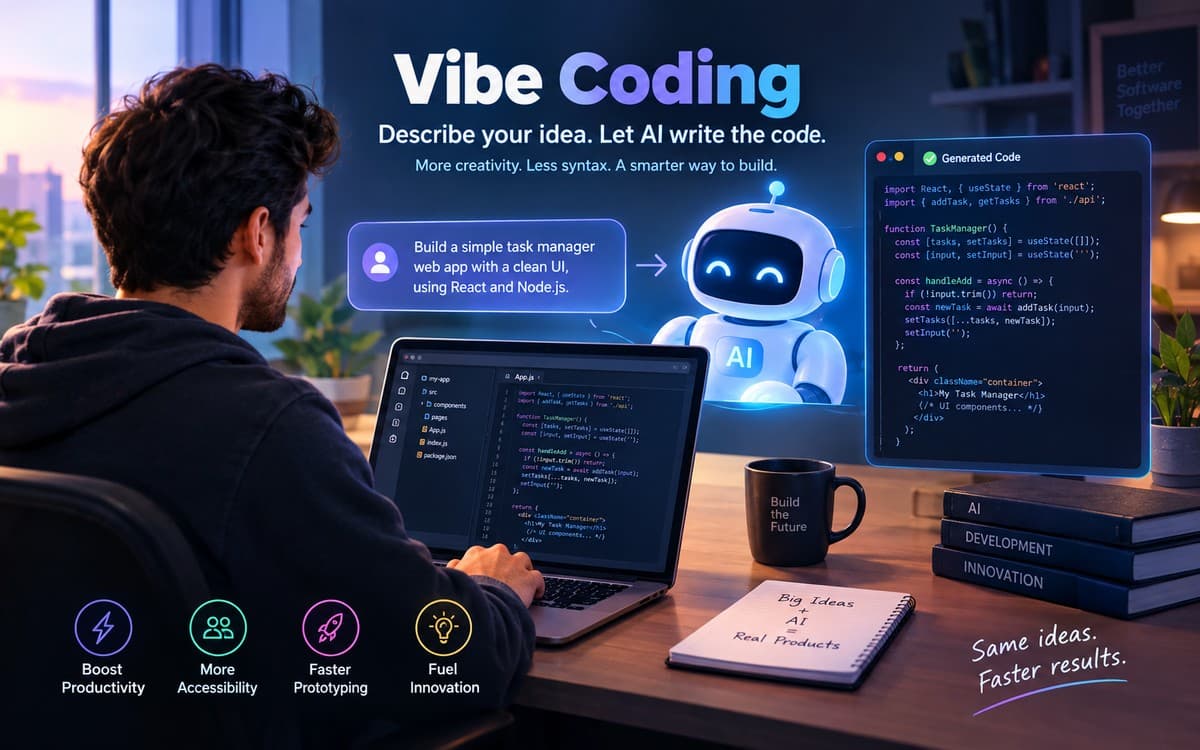
Software development is one of the clearest examples of how AI is changing IT. For decades, developers have written code manually, searched documentation, debugged errors, reviewed pull requests, and created tests. These activities remain important, but AI coding assistants are increasingly becoming part of the development workflow.
An AI-assisted developer can describe a desired function in natural language, generate a code draft, ask the system to explain unfamiliar code, identify potential bugs, create test cases, refactor repetitive sections, and generate documentation. The developer remains responsible for architecture, correctness, security, maintainability, and final approval, but the amount of mechanical work can decrease.
This changes the role of the developer interestingly. The value of programming is gradually moving away from simply typing syntax toward understanding systems and defining the right problems. If AI can generate a reasonable implementation in seconds, the developer's ability to determine what should be built, why it should be built, how components should interact, and whether the generated result is trustworthy becomes even more important.
That does not make coding knowledge irrelevant. It makes technical understanding more valuable because developers must be able to evaluate what AI produces. The future developer may spend less time writing every line manually and more time acting as an architect, reviewer, problem-solver, and technical decision-maker.
AI Is Changing How IT Companies Build Products
AI is also shortening the distance between an idea and a working prototype. In the traditional software-development model, a business idea might move through requirements gathering, design, development, testing, revisions, and deployment before users can experience it. AI-assisted development can accelerate several of those stages.
A product team can use AI to convert rough requirements into user stories, generate interface concepts, produce prototype code, create test scenarios, analyze feedback, and prepare technical documentation. This does not eliminate the need for experienced product managers, designers, developers, and QA professionals. Instead, it allows teams to iterate more quickly.
That speed can become a business advantage. A company that can test five product concepts while a competitor tests two has more opportunities to discover what customers actually want. AI therefore becomes more than a productivity tool. It becomes an experimentation engine.
The best IT companies will increasingly compete not only on the quality of their products but also on the speed at which they can learn. AI makes that learning cycle faster by reducing the cost of experimentation.
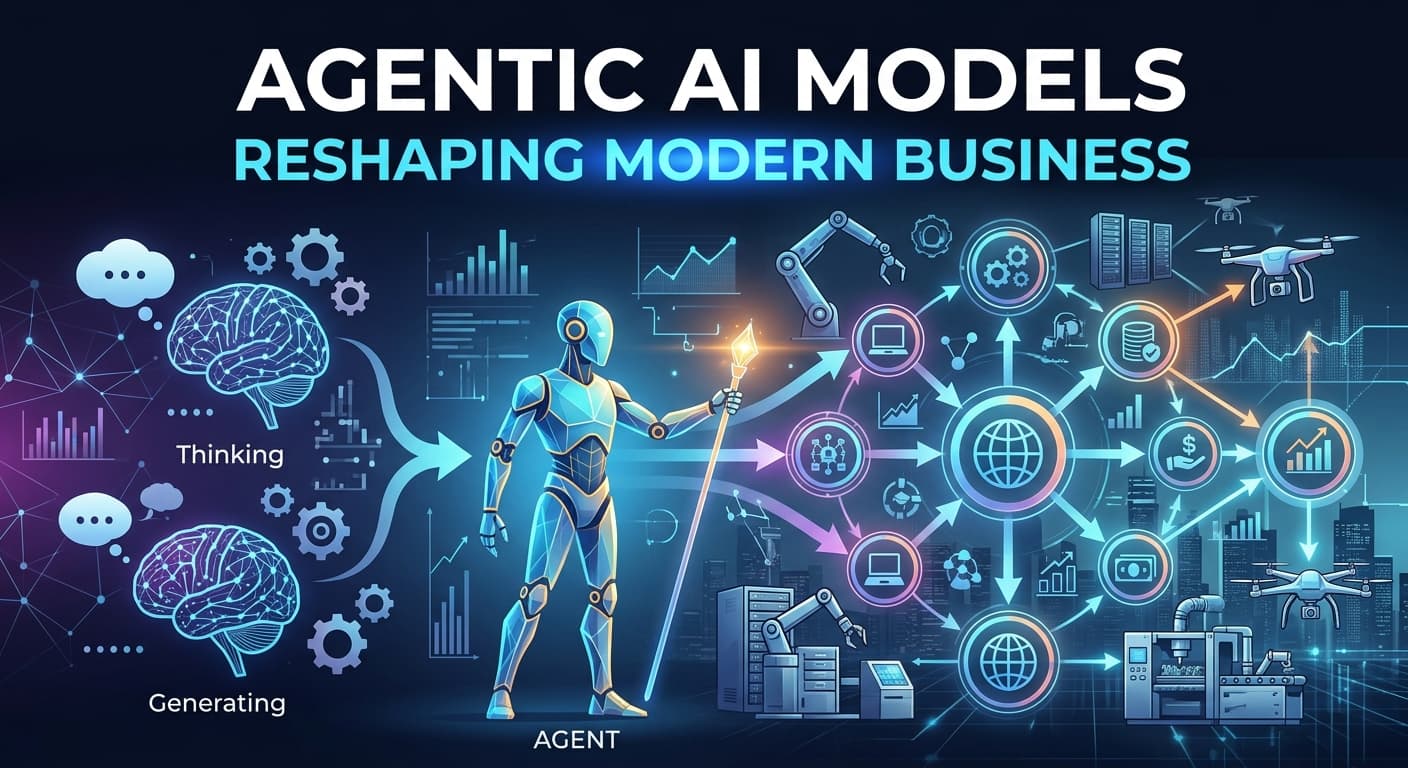
AI Agents Are Taking Automation to the Next Level
Automation is not new to IT. Businesses have used scripts, workflows, integrations, APIs, and robotic process automation for years. The difference with AI agents is that automation can become more flexible and context-aware.
A traditional workflow follows predefined instructions:
If X happens → perform Y.
An AI agent can potentially interpret a goal, examine available information, select appropriate tools, perform multiple steps, and escalate when human approval is required.
Imagine an IT support environment where a user reports that an application is not working. Instead of simply creating a ticket, an AI agent could identify the user, understand the issue, check system status, review recent incidents, search approved knowledge sources, suggest a resolution, and escalate the case if the issue requires human intervention.
Microsoft's 2025 Work Trend Index identified the rise of organizations built around human-agent collaboration, with research involving 31,000 professionals across 31 countries. Microsoft reported that many leaders expected AI agents to play a significant role in expanding workforce capacity.
This does not mean every business process should become autonomous. It means IT organizations are moving toward a model where software can increasingly participate in workflows rather than simply wait for instructions.
AI and Cloud Computing Are Becoming Closely Connected
Cloud computing gave businesses scalable infrastructure. AI is now helping them use that infrastructure more intelligently.
Modern cloud environments generate enormous quantities of information: application logs, user activity, network metrics, infrastructure events, performance data, security alerts, and usage patterns. Humans cannot manually examine all of this information continuously. AI can help identify anomalies, predict infrastructure requirements, optimize resource allocation, and surface operational problems.
For example, an intelligent cloud-management system could identify that an application is experiencing unusual traffic and recommend scaling resources. It could detect that a particular workload is consuming more resources than expected. It could identify recurring infrastructure problems and help operations teams investigate their causes.
The combination of cloud + AI + automation is therefore creating a more adaptive technology environment. Instead of infrastructure simply responding to commands, intelligent systems can increasingly monitor conditions and recommend or execute approved actions.
This has major implications for IT service providers. Cloud management is gradually moving from infrastructure administration toward intelligent optimization, where businesses expect providers to deliver not just servers and storage but measurable efficiency, resilience, security, and business value.
AI Is Reshaping Cybersecurity
Cybersecurity may become one of the most important areas of AI adoption because the scale and speed of modern threats make manual monitoring increasingly difficult.
Security teams receive enormous volumes of alerts from endpoints, networks, applications, identity systems, cloud environments, and other sources. The problem is not always a lack of information. It is often too much information.
AI can help security teams identify unusual patterns, correlate events, prioritize alerts, detect anomalies, summarize incidents, and assist analysts during investigations. Instead of asking a human analyst to inspect every alert individually, intelligent systems can help determine which events deserve immediate attention.
But cybersecurity also illustrates the double-edged nature of AI. Attackers can use AI to generate convincing phishing messages, automate reconnaissance, discover vulnerabilities, and scale malicious activity. Defenders therefore need AI not simply as an optional productivity tool but increasingly as part of their defensive strategy.
The future cybersecurity team will likely combine human expertise with intelligent detection and response systems. Humans will remain responsible for complex investigations, policy decisions, risk assessment, and accountability, while AI can help process the enormous volume of signals generated by modern infrastructure.
AI Is Making Data More Valuable
Data has always been one of the most important assets in technology. Yet many organizations have accumulated huge quantities of data without being able to extract its full value.
AI changes that equation because it can interact with data in more natural and flexible ways. Instead of requiring every employee to understand database structures or complex analytics tools, AI interfaces can allow users to ask questions in ordinary language.
A business leader could ask:
“Which service generated the highest margin this quarter?”
A sales manager could ask:
“Which customers have reduced their purchasing activity?”
An operations manager could ask:
“Where are our biggest delivery delays occurring?”
The value is not simply the conversational interface. The real value comes from connecting AI to reliable enterprise data and appropriate permissions.
This is why organizations pursuing AI transformation must pay serious attention to data governance. AI cannot create trustworthy business intelligence from inconsistent, duplicated, outdated, or poorly structured information. The future belongs to businesses that treat data quality as a strategic asset, not just a technical housekeeping task.
AI Is Creating New IT Business Models
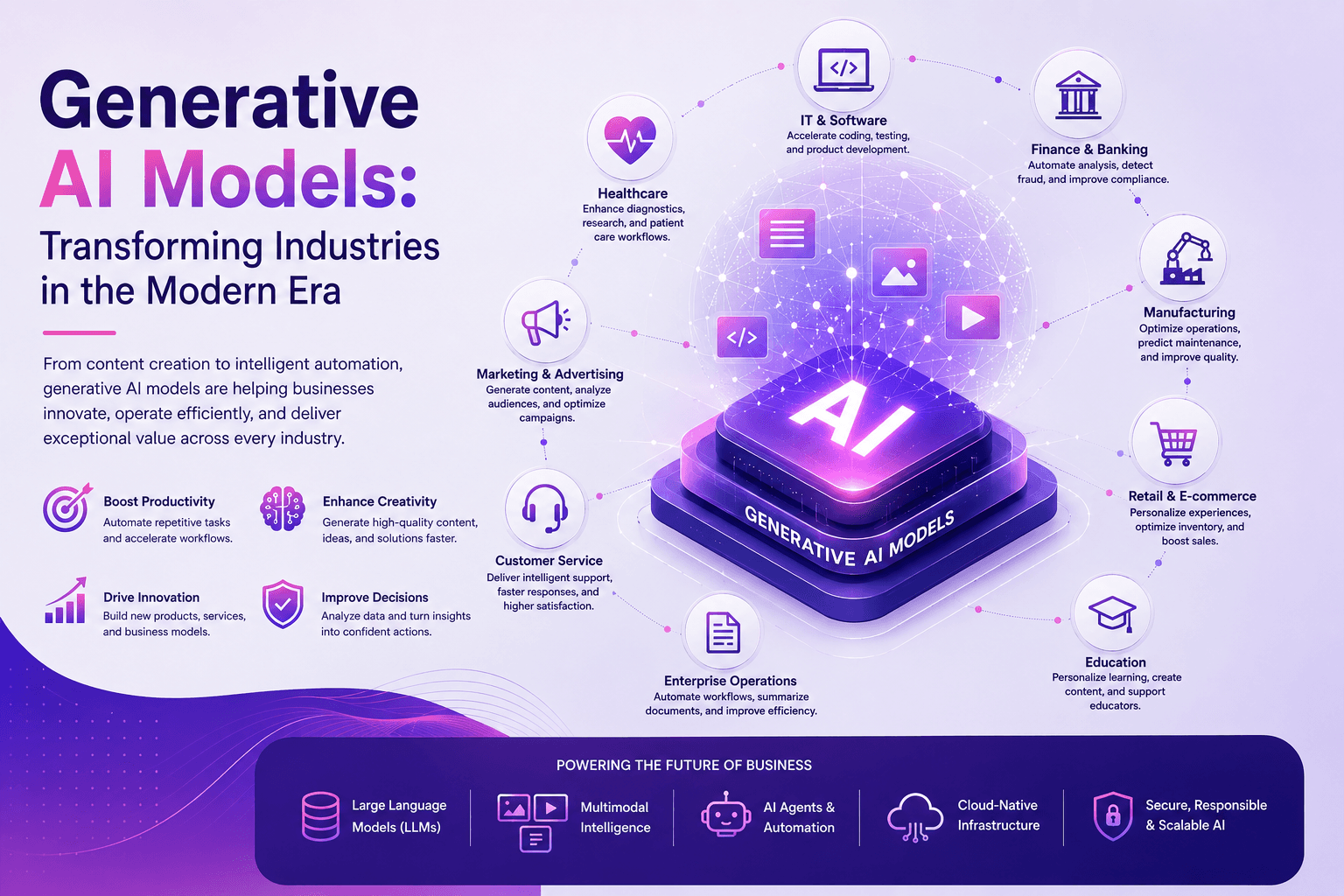
AI is not only improving existing IT businesses. It is creating entirely new categories of products and services.
Software companies can build AI-powered customer support platforms. Cybersecurity companies can develop intelligent threat detection systems. Healthcare technology providers can build AI-assisted administrative tools. ERP providers can add predictive intelligence. CRM platforms can introduce AI sales assistants. Cloud companies can provide AI infrastructure and model services.
This creates a major opportunity for startups and established technology companies alike.
A small software company no longer needs to build every capability internally. It can combine cloud infrastructure, APIs, foundation models, specialized databases, automation platforms, and its own domain expertise to create highly targeted products.
That lowers some barriers to innovation while increasing competition. The differentiator will increasingly become domain expertise + proprietary data + workflow integration + user experience, rather than AI access alone.
Having access to a powerful model is becoming less unique. Knowing how to apply that capability to a specific business problem is becoming more valuable.
AI Is Helping IT Companies Scale Without Scaling Everything Else
One of the strongest commercial advantages of AI is the possibility of scaling output without increasing every input proportionally.
Consider customer support. A traditional company may need additional staff as its customer base grows. AI can handle appropriate routine questions, summarize cases, categorize requests, and assist human agents. The result is not necessarily zero human support. Instead, human capacity can be directed toward complex cases.
The same principle applies to software documentation, internal knowledge management, sales research, marketing operations, testing, data analysis, and IT service management.
This is particularly powerful for growing companies. A business with 30 employees can potentially use AI to perform workflows that previously required a much larger operational team.
However, responsible scaling requires boundaries. AI-generated output must be reviewed where accuracy matters, sensitive information must be protected, and automated actions must have appropriate controls. Productivity without governance can quickly become operational risk.
The IT Workforce Is Changing — Not Simply Disappearing
The most simplistic AI narrative says that automation will eliminate technology jobs. The real picture is more complicated.
PwC's 2026 AI Jobs Barometer analyzed more than one billion job advertisements across 27 countries and territories and found that AI-exposed companies were growing headcount faster than less-exposed companies. It also found that jobs requiring specific AI skills were growing dramatically faster than the broader job market, while the wage premium associated with AI skills had reached 62%.
This suggests a more nuanced transformation. Some repetitive tasks may disappear, but new responsibilities emerge around AI integration, model governance, data engineering, AI product management, security, prompt design, evaluation, automation architecture, and human-AI workflow design.
The skills businesses need are changing too. PwC found that skills in the most AI-exposed jobs were changing substantially faster than those in less-exposed jobs.
For IT professionals, this creates a clear message: continuous learning is no longer optional.
A developer who understands AI-assisted development has an advantage. A cybersecurity professional who understands AI-driven threats has an advantage. A cloud engineer who understands intelligent infrastructure has an advantage. A business analyst who can work with AI-driven analytics has an advantage.
The winning skill is not merely “knowing AI.” It is knowing how to apply AI to a real business problem.
AI Is Moving IT From Efficiency to Growth
Perhaps the biggest misconception about enterprise AI is that its purpose is simply to reduce costs.
Cost reduction matters, but it is only one part of the opportunity.
AI can help businesses discover new customers, develop products faster, personalize services, identify new revenue opportunities, improve customer retention, and enter markets more efficiently. This changes AI from an efficiency strategy into a growth strategy.
PwC's 2025 AI Jobs Barometer specifically recommended that businesses treat AI as a growth strategy rather than only an efficiency strategy. Its research found substantially faster revenue-per-employee growth in industries more exposed to AI.
For an IT company, this might mean using AI to launch a new SaaS product faster. For a software house, it might mean serving more clients without increasing administrative overhead at the same rate. For an enterprise, it might mean using AI to better understand customers and create new services.
The question should therefore not be:
“How much money can AI save us?”
A better question is:
“What could our business do with AI that it could not economically do before?”
That is where transformation begins.
Why AI Adoption Alone Does Not Guarantee Success
There is a growing difference between companies that use AI and companies that transform around AI.
McKinsey's 2025 research makes this particularly clear. Although 88% of respondents reported AI use in at least one business function, only 7% said their organizations had fully scaled AI across the enterprise.
That means experimentation is widespread, but mature implementation is still relatively uncommon.
Many businesses make the mistake of purchasing an AI tool and expecting productivity to appear automatically. But AI works best when workflows are redesigned around its capabilities.
If a company simply gives employees an AI assistant but keeps every old approval process, reporting structure, data silo, and manual workflow intact, the productivity gain may remain limited.
Real transformation requires businesses to ask:
Which processes should be automated?
Which decisions can AI support?
Where is human judgment essential?
What data does AI need?
What permissions should AI have?
How will outputs be evaluated?
How will success be measured?
AI is therefore not just a technology implementation. It is an operating-model transformation.
The Human Element Still Matters
The more capable AI becomes, the more important human judgment can become in certain areas.
AI can generate code, but humans decide whether the architecture is appropriate. AI can analyze customers, but humans decide how relationships should be managed. AI can detect security anomalies, but security professionals determine the seriousness of the threat. AI can generate business recommendations, but leadership remains accountable for strategic decisions.
PwC's 2026 research reinforces this point, showing increased demand for human-intensive skills such as judgment, creativity, leadership, and adaptability in AI-exposed roles.
This creates an interesting paradox: as technology becomes more intelligent, distinctly human capabilities can become more valuable.
The future IT professional will not necessarily compete against AI. They will compete against professionals who know how to use AI better.
That is a very different race.
How IT Businesses Can Start Using AI Productively
Businesses do not need to transform everything overnight. In fact, trying to implement AI everywhere at once can create unnecessary complexity.
A better approach is to start with high-value, measurable problems.
An IT company might begin with:
Software development: AI-assisted coding, documentation, testing, and debugging.
Customer support: Intelligent ticket classification, knowledge retrieval, summaries, and automated responses for appropriate cases.
Sales: Lead research, proposal generation, customer analysis, and CRM intelligence.
Cybersecurity: Alert prioritization, anomaly detection, threat analysis, and incident summaries.
Operations: Automated reporting, workflow orchestration, resource forecasting, and process monitoring.
Management: AI-assisted business intelligence, forecasting, and decision support.
The important part is measurement. Businesses should track outcomes such as development time, support resolution time, conversion rates, operational costs, error rates, customer satisfaction, and revenue.
If AI is not producing a measurable business improvement, the implementation needs to be reconsidered.
The Future of the IT Industry Will Be Human + AI
The next phase of the IT industry will not simply be about humans using AI tools. It will increasingly involve humans working alongside AI systems that participate directly in workflows.
Developers will work with coding agents. Security analysts will work with intelligent detection systems. Project managers will work with AI planning assistants. Customer service teams will work with digital agents. Business leaders will interact with intelligent enterprise platforms.
This creates a new organizational model.
Instead of thinking only in terms of employees and software, companies may increasingly think in terms of human teams + digital agents + intelligent systems.
Microsoft's 2025 Work Trend Index describes this direction through the concept of human-agent collaboration and the emergence of “Frontier Firms.”
The organizations that adapt fastest will likely be those that learn how to divide work intelligently between humans and machines.
Machines can handle scale.
Humans can provide judgment.
AI can identify patterns.
Humans can understand context.
AI can accelerate execution.
Humans can define purpose.
That combination could become one of the defining characteristics of the modern IT industry.
What Businesses Should Expect Next
The next few years are likely to bring deeper integration between AI, cloud platforms, enterprise applications, cybersecurity systems, development environments, and business intelligence.
AI will become less visible as a standalone product and more embedded inside the tools people already use.
That may ultimately be the biggest change.
People will not necessarily open an application and think, “Now I am using AI.” The AI will simply be part of the workflow. It will recommend the next action, summarize the information, generate the first draft, identify the anomaly, predict the risk, or automate the repetitive step.
At the same time, businesses will need stronger governance because the consequences of AI mistakes will grow as AI gains access to more systems.
The future therefore requires two things simultaneously:
More AI capability and better AI governance.
Companies that focus on only one side will struggle. Powerful AI without governance creates risk. Strong governance without meaningful AI adoption creates stagnation.
The real competitive advantage lies in balancing both.
Conclusion: AI Is Becoming the Growth Engine of Modern IT
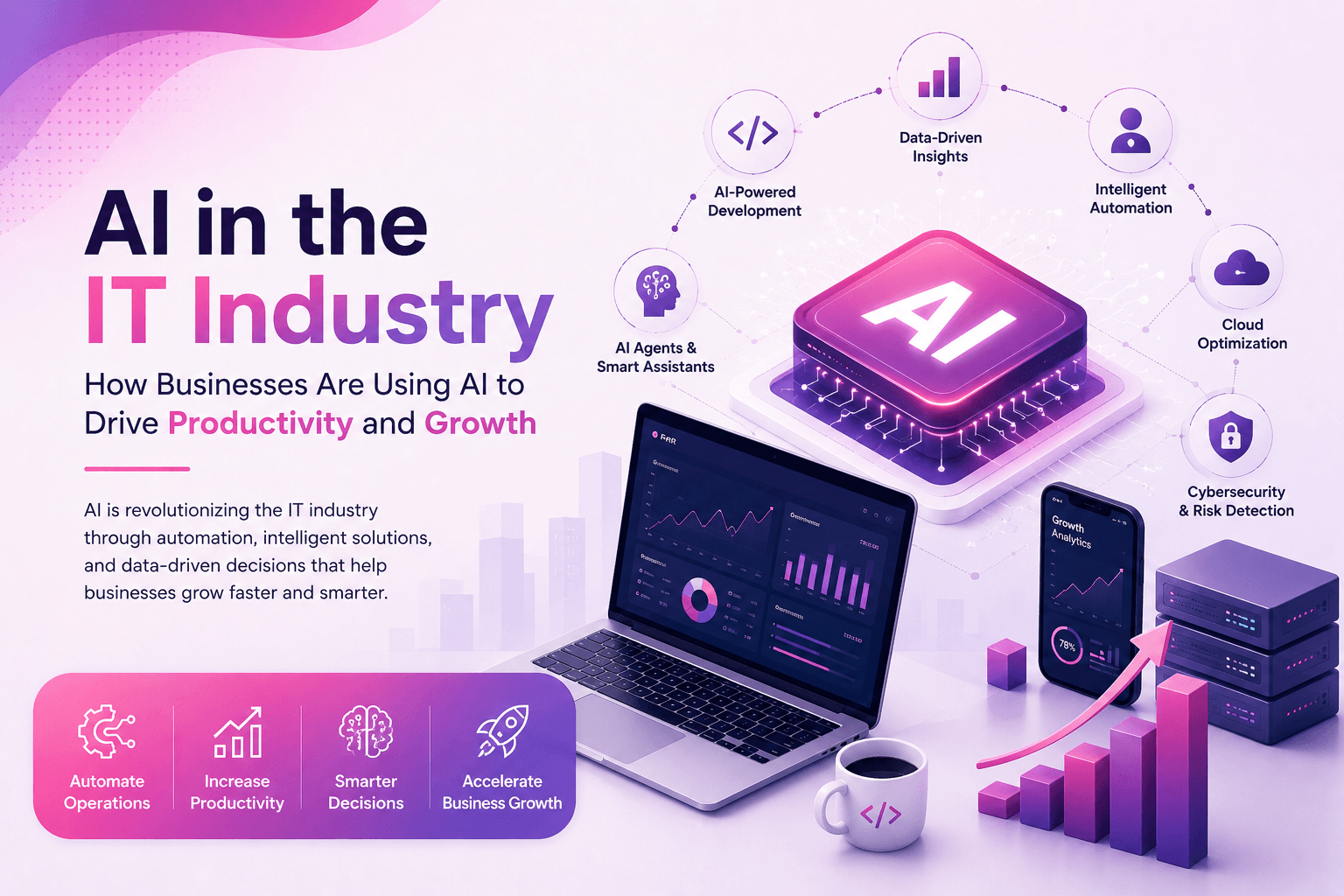
AI is transforming the IT industry because it is changing more than individual tasks. It is changing how software is developed, how infrastructure is managed, how cybersecurity operates, how businesses analyze data, how employees work, and how technology companies create new products.
The strongest evidence suggests that this transformation is already producing measurable business effects. AI-exposed industries and companies are showing stronger productivity and revenue-per-employee growth, while demand for AI-related skills continues to accelerate. At the same time, enterprise adoption remains immature, with many organizations experimenting but relatively few having fully scaled AI across the business.
That gap represents both a challenge and an opportunity.
The companies that treat AI as another software feature may achieve incremental improvements. The companies that redesign their workflows, develop AI-ready talent, improve their data foundations, introduce intelligent automation, and connect AI directly to business objectives can create something much more valuable: a more productive, adaptive, and scalable organization.
The future of IT will not belong simply to businesses that have access to AI.
It will belong to businesses that know what to do with it.
AI is becoming the new productivity layer of technology. It is becoming an intelligence layer for business. And increasingly, it is becoming a growth layer that allows companies to build faster, operate smarter, serve customers better, and compete in markets that are changing almost every day.
The real AI revolution in IT is therefore not about replacing the people who build technology.
It is about giving those people—and the businesses they serve—the ability to accomplish far more than they could before.
Frequently Asked Questions
1. How is AI transforming the IT industry?
AI is transforming IT through software development automation, intelligent cybersecurity, cloud optimization, predictive analytics, AI agents, data analysis, and automated business workflows.
2. How does AI improve productivity in IT?
AI improves IT productivity by automating repetitive tasks, accelerating software development, assisting with testing and documentation, analyzing large datasets, and helping employees make faster decisions.
3. Can AI help IT companies grow their businesses?
Yes, AI can support business growth by reducing operational friction, accelerating product development, improving customer experiences, identifying opportunities, and enabling companies to scale services more efficiently.
4. Will AI replace IT professionals?
AI is more likely to transform IT roles than eliminate the need for IT professionals, increasing demand for skills involving architecture, judgment, AI integration, cybersecurity, creativity, and strategic problem-solving.
5. What is the future of AI in the IT industry?
The future of AI in IT will increasingly involve AI agents, intelligent software development, autonomous workflows, AI-powered cybersecurity, predictive cloud management, and deeper collaboration between human teams and AI systems.




 AITech