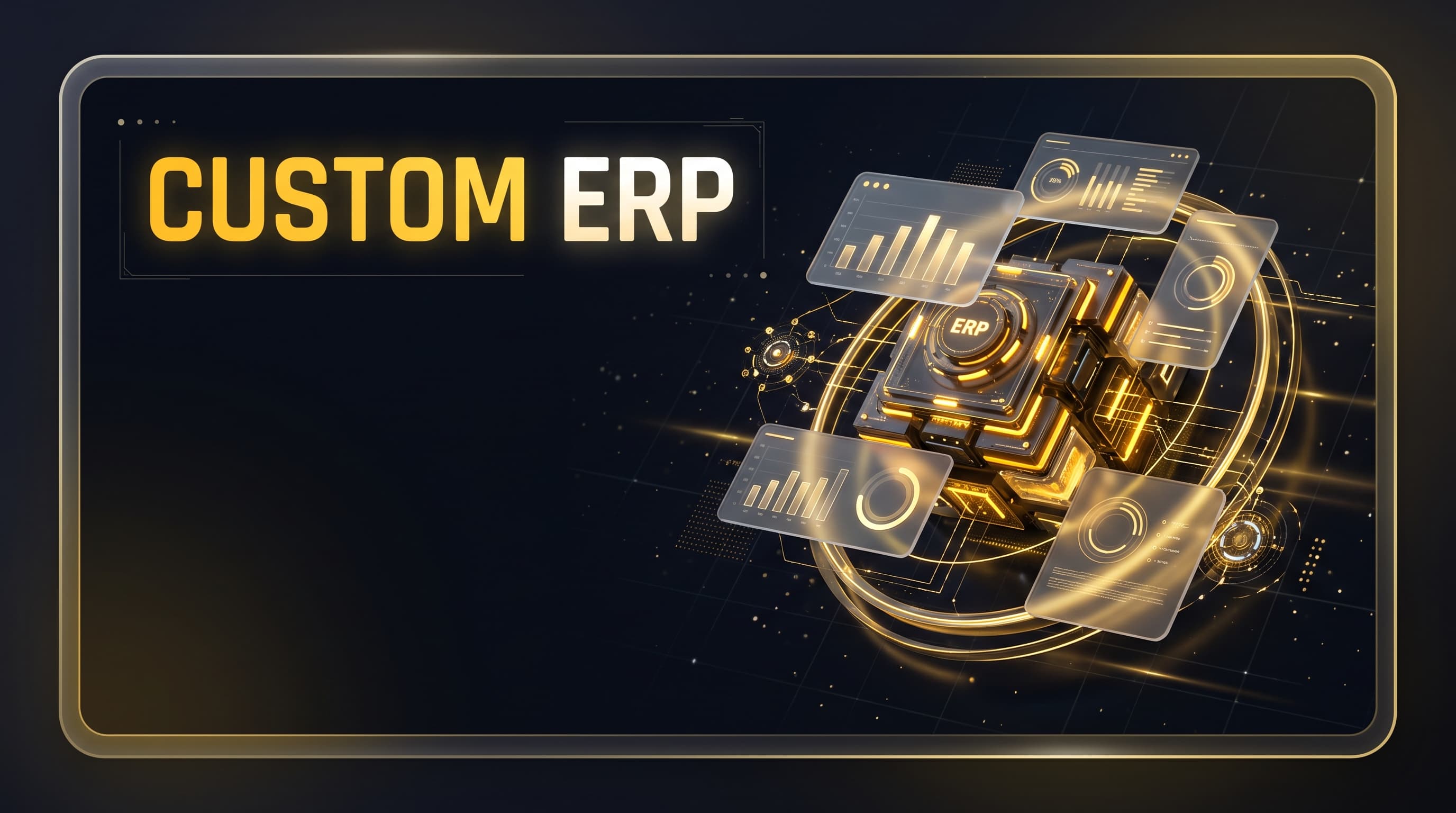
Efficiency and adaptation are absolutely vital in the competitive corporate scene nowadays. To get a competitive edge, many businesses are switching from off-the-shelf solutions to custom ERP systems. Custom ERP solutions guarantee optimal efficiency and integration since they are designed to fit certain business processes, unlike traditional ERP systems. The main features of custom ERP development, its advantages, and the elements to be taken into account while putting a custom ERP system into use are investigated on this site.
Understanding ERP Systems
ERP System Overview
From simple accounting and inventory control applications, enterprise resource planning (ERP) systems have developed into complete company automation platforms. Originally meant to simplify manufacturing processes, ERP systems now span finance, HR, supply chain, and customer relationship management.
ERP Software Standard vs. Custom ERP Systems
Although off-the-shelf ERP systems offer broad capabilities, they sometimes force companies to modify their processes to match the program. Custom ERP systems, on the other hand, are designed to fit certain operational requirements, so guaranteeing flawless integration and maximum efficiency.
Key Functionalities of ERP System
ERP systems usually comprise:
Budgeting, invoicing, and financial reporting constitute accounting and finance.
Monitoring inventory and logistics helps to support supply chain management.
Customer relationship management, or CRM, is handling client contacts.
Payroll, hiring, and employee data handling constitute human resource management.
Reporting and Data Analytics: Real-time corporate knowledge.
Benefits of Custom ERP systems
Designed to Meet Business Requirements
Custom ERP solutions, unlike generic solutions, are made to meet certain business processes, therefore removing pointless features and increasing usability.
Flexibility and Scalability
Growing companies change their software needs. Easy scalability made possible by custom ERP development guarantees that the system will fit future needs without substantial overhauls.
Flawless Integration
Better connectivity with current tools, including CRM, e-commerce platforms, and outside applications guaranteed by a custom ERP system, helps to lower data silos and increase workflow efficiency.
Enhanced User Experience
Companies can lower the learning curve connected with conventional ERP systems and increase employee productivity by creating a clear user interface.
Measurable ROI
Higher efficiency, lower running costs, and more income are common outcomes of custom ERP projects. Case studies reveal that companies implementing custom ERP systems get up to a thirty percent increase in operational efficiency.
Key Considerations for Developing a Custom ERP System
Requirements Analysis
Identification of pain points and definition of system requirements depend on a comprehensive business process analysis.
Stack in Technology
Selecting the proper technology stack guarantees security, scalability, and performance. On-site solutions give more control; cloud-based custom ERP systems offer flexibility.
Vendor vs In-House Development
Companies have to choose whether to outsource the project or assemble an internal development team. Outsourcing brings experience, while internal development gives more control.
Timeline and Budget
Custom ERP development calls for large financial outlays. Businesses should project expenses, allocate funds, and create reasonable schedules.
Compliance and Safety
Crucially, it is data security and regulatory compliance. Development calls for consideration of industry standards, including GDPR and ISO 27001.
The Custom ERP Development Procedure
Plan and design by stating goals, compiling needs, and drawing blueprints.
Development and Integration: Create the system using agile approaches, then link it with current systems.
Test and quality assure yourself thoroughly to find and solve flaws.
Deployment and training implementation of the system will help to train staff members for a seamless change.
Continuous support and maintenance guarantee long-term success by means of frequent upgrades and optimizations.
Challenges and Best Practices
Common Challenges
Change Management: Workers object to new systems.
Data migration concerns: moving information from antiquated systems.
High initial costs: development and implementation investment.
Best Practices
Analyze in great detail your requirements
Invest in scalable technologies.
Provide staff support and training.
Update and optimize systems often
Future Trends in Custom ERP Systems
ERP is being shaped going forward by emerging technologies such as cloud computing, IoT, and artificial intelligence. Custom ERP solutions will be improved by predictive analytics, AI-driven automation, and blockchain integration, therefore increasing their intelligence and security value.
Conclusion
A customized ERP system is a strategic investment improving competitiveness, scalability, and efficiency. Custom ERP development should be taken under consideration by companies trying to maximize operations in order to fit their particular requirements. About to investigate a custom ERP solution? Contact us for a consultation today!
Are you looking for a reliable ERP software solution? Discover how decimal solutions can help transform your practices!
Why Decimal Solutions?
Focusing on custom software development, ERP systems, CLMS, CRMS, and AI-powered solutions, Decimal Solution is a business that trusts us for AI-driven invention for the following reasons:
Custom AI Solutions—We fit your specific business requirements with artificial intelligence solutions.
Our team makes sure your present systems are easily incorporated.
Compliance and Data Security—The first concern is data security following industry best practices.
24/7 Support—We promise ideal functioning of your AI solutions by means of 24/7 support and maintenance.
Get in Touch With Us!
Let us assist you in finding practical opportunities among challenges and realizing your dreams.
linkedin.com/in/decimal-solution — LinkedIn
decimalsolution.com/ — Website
thedecimalsolution@gmail.com — Email




 Semiconductor & AI Hardware