The mobile app industry has grown fast, giving enterprises additional possibilities for digital communication and mobile app development services. Two key strategies stand out: Progressive Web Apps (PWAs) and Native Apps. A variety of considerations impact the selection, including development costs, performance, security, and user experience. This blog examines the differences, benefits, and financial consequences between PWAs and Native Apps.
Understanding Progressive Web Apps (PWAs)
What is a PWA?
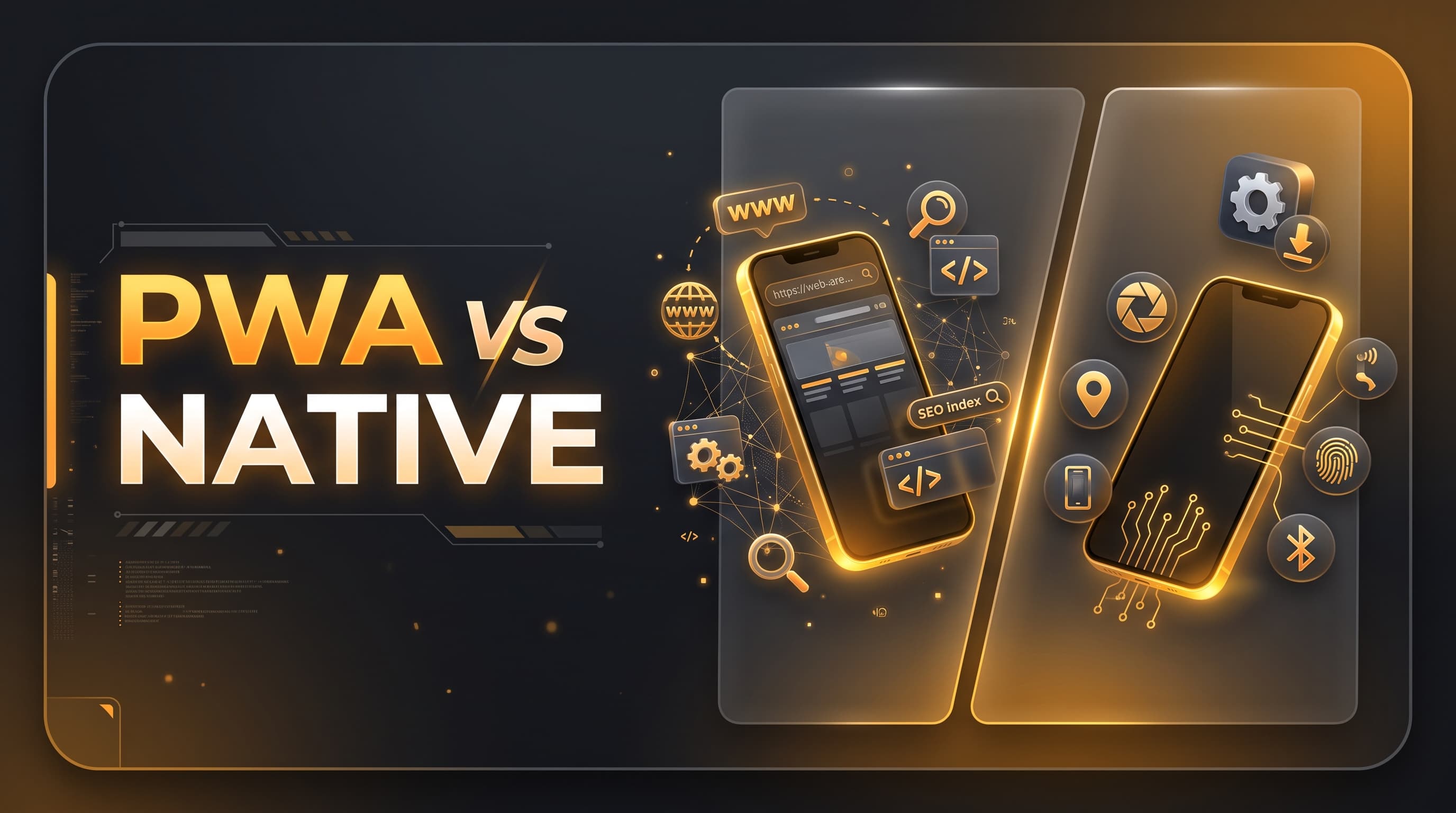
Progressive Web Apps (PWAs) are web-based programs that operate like native apps yet run in web browsers. They use contemporary web technologies like HTML, CSS, and JavaScript to provide an app-like experience that does not require a download from an app store.
Key features of PWAs:
Cross-Platform Compatibility: Works smoothly on several devices and operating systems.
The offline functionality allows consuming service providers to preserve content for offline usage.
SEO-friendly: Easily found in search engines, resulting in improved organic reach.
No installation is required. Users may access PWAs using a URL rather than installing an app.
Examples of successful PWAs:
Twitter Lite enables more interactions with less data use.
Forbes reported a 43% increase in user sessions following the deployment of PWAs.
BMW reported a 50% increase in mobile traffic after implementing PWAs.
Understanding Native Applications
What Are Native Applications?
Native apps are platform-specific programs built with languages such as Swift (iOS) and Kotlin/Java (Android). They may be downloaded and installed through app stores such as Google Play and Apple's App Store.
Key Features of Native Apps:
Optimized Performance: The direct link with device hardware enables for faster replies.
Advanced functionality allows users to fully control smartphone capabilities including GPS, cameras, and push alerts.
Better Security: App store reviews improve security safeguards.
Offline Access: Data may be stored locally and accessed without an internet connection.
Examples of Successful Native Applications:
Starbucks enhanced the customer experience by providing personalized alternatives.
Uber offers rapid navigation and real-time tracking.
Instagram has a fluid UI/UX that is designed for device performance.
Comparative Analysis of PWAs and Native Apps
The progressive web apps vs native apps battle intrigues many developers and businesses. So, will progressive web apps (PWAs) replace native apps in the future? What is the difference between PWA and native apps? What are the strengths and weaknesses of PWAs and native apps?
Development and Maintenance Costs
PWAs are cost-effective since they share the same codebase across all platforms.
Native apps require separate development for iOS and Android, which raises expenses.
Performance and User Experience.
PWAs rely on browser features and may have performance constraints.
Direct device communication allows native apps to deliver quicker and more seamless experiences.
Offline functionality.
PWAs: Utilize service workers to give limited offline access.
Native apps can work completely offline by saving data on the device.
Security Considerations
PWAs rely on internet security mechanisms yet may be subject to cyber attacks.
Native Apps: To boost security, meet all app store authentication requirements.
Discoverability and SEO
PWAs are indexable by search engines, increasing organic reach.
Native apps rely on App Store Optimization (ASO) to get momentum.
Business Considerations When Choosing Between PWAs and Native Apps
Target Audience and Market Reach
PWAs are ideal for businesses who wish to reach a large audience across several platforms.
Native applications are ideal for businesses who wish to target clientele that use certain platforms.
Budget and Resource Allocation
PWAs are generally inexpensive to develop and operate.
Native apps need a significant initial investment while offering a superior user experience.
Desired Features and Functionalities.
PWAs are best suited for content-based and e-commerce apps.
Native apps are ideal for applications requiring advanced hardware capabilities, like as gaming and AR/VR.
Case Studies
Businesses Benefit from PWAs.
Flipkart reported a 70% boost in conversion rates after implementing a PWA.
Pinterest increased engagement by 60% with a faster-loading PWA.
Businesses Benefit from Native Apps.
Nike increased brand loyalty with individualized app experiences.
Spotify has improved its streaming quality and offline playing capabilities.
Future Trends in App Development.
AI Integration: AI-powered customization is accessible for both PWAs and native applications.
5G Impact: Faster internet speeds will improve PWA performance.
Hybrid Approaches: Many companies use both PWA and native app strategies.
Conclusion
There is no one-size-fits-all option when deciding between PWAs and Native Apps. Before making a selection, companies should evaluate their unique objectives, budget, and target audience. PWAs are less expensive and simpler to use than native applications, which are more secure and faster. Evaluate these qualities to assist businesses in optimizing their mobile strategy and achieving long-term success.
Are you looking for a reliable mobile-based app? Discover how decimal solution can help transform your practices.
Still unsure whether a PWA or Native App is right for your business? Our experts can guide you! Get a Free Consultation
FAQs
1. PWAs vs. Native Apps: Which is better for SEO?
PWAs are better for SEO since search engines index them, resulting in more organic traffic.
2. Are PWAs more cost-effective than native apps?
Yes, PWAs use a single codebase, which reduces development and maintenance expenses.
3. Can a business go from a PWA to a Native App?
Yes, organizations may begin with a PWA and subsequently develop a Native App if more sophisticated functionality is required.
4. Are PWAs compatible with iOS devices?
Yes, although there are certain constraints because Apple limits some PWA functionality.
5. What app has the best offline functionality?
Native applications improve offline accessibility, but PWAs cache data via service workers.
Why Decimal Solutions?
Focusing on custom software development, ERP systems, CLMS, CRMS, and AI-powered solutions, Decimal Solution is a business that trusts us for AI-driven invention for the following reasons:
Custom AI Solutions—We fit your specific business requirements with artificial intelligence solutions.
Our team makes sure your present systems are easily incorporated.
Compliance and Data Security—The first concern is data security following industry best practices.
24/7 Support—We promise ideal functioning of your AI solutions by means of 24/7 support and maintenance.
Get in Touch With Us!
Let us assist you in finding practical opportunities among challenges and realizing your dreams.
linkedin.com/in/decimal-solution — LinkedIn
decimalsolution.com/ — Website
thedecimalsolution@gmail.com — Email




 Frontier AI Models & Agentic Reasoning Systems