Introduction: The Rise of AI in Code Security
In a digital world where every line of code can become a potential attack vector, code security is no longer optional. Cybercriminals exploit even the smallest flaw, causing massive data breaches and financial losses. Enter Google’s AI agent, a revolutionary technology designed to automatically detect vulnerabilities, rewrite risky code, and ensure secure software development without human intervention.
This innovation is more than just a tool. It represents a significant shift toward proactive cybersecurity, where threats are neutralized before they can cause damage. With AI’s deep learning capabilities and real-time code analysis, development teams can now ship secure software faster and more confidently than ever before.
What Is Google’s AI Agent?
The Core of Google’s AI Agent
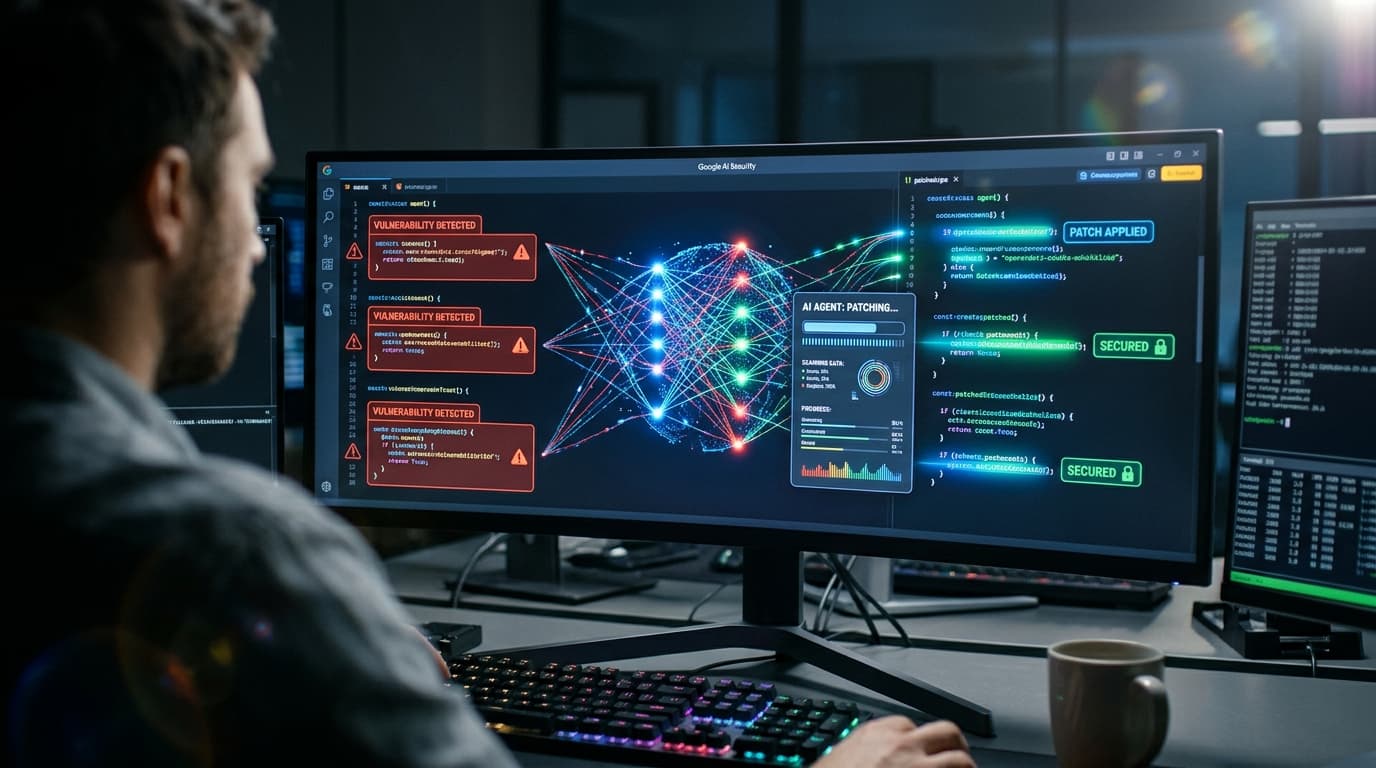
At its core, Google’s AI agent is an advanced machine learning system that scans, identifies, and repairs vulnerabilities in software code. Unlike traditional tools that only highlight risks, this AI goes a step further by rewriting insecure code and implementing best practices automatically.
Its primary features include:
Real-time code analysis across multiple programming languages
Vulnerability detection based on global security databases
Automated patch generation with secure coding techniques
Why It Stands Out From Traditional Security Tools
Conventional security scanners are reactive and require manual fixes. Google’s AI solution is proactive. It not only finds issues but also resolves them instantly, drastically reducing response times and minimizing the risk of human error.
This shift from detection to autonomous remediation marks a new era in secure software development.
Why Code Vulnerabilities Are a Growing Threat
Complex Software Increases Risk
Modern applications are built from millions of lines of code and often rely on third-party libraries, APIs, and cloud integrations. Each new dependency introduces potential vulnerabilities. As software ecosystems grow more complex, security risks multiply.
Real-World Consequences of Unpatched Vulnerabilities
Failure to address vulnerabilities quickly can lead to devastating consequences, including:
Data breaches that expose sensitive information
Ransomware attacks that halt business operations
Regulatory penalties for non-compliance
The infamous Equifax breach and SolarWinds attack were both linked to unpatched flaws. These incidents highlight why automated vulnerability management is now essential.
How Google’s AI Agent Detects and Fixes Vulnerabilities
Step 1: Vulnerability Detection
The AI uses advanced pattern recognition to analyze code and identify potential flaws. It checks against a massive database of known vulnerabilities and continuously learns from new threats.
Step 2: Code Analysis and Prioritization
Detected vulnerabilities are prioritized based on severity, exploitability, and potential impact. This ensures that critical issues are addressed first, improving overall code security.
Step 3: Automated Patching and Rewriting
The most innovative feature is the AI’s ability to rewrite vulnerable code automatically. Instead of simply flagging the problem, it provides a secure alternative, ensuring the codebase remains stable and functional.
Main Ways Google’s AI Agent Is Transforming Code Security
1. Real-Time Vulnerability Scanning
The AI continuously scans codebases during development and deployment, detecting issues before they reach production.
2. Automated Patch Deployment
By instantly rewriting unsafe code, the AI reduces dependency on manual intervention, cutting remediation times from weeks to seconds.
3. Enhanced Developer Productivity
Developers can focus on building new features instead of constantly addressing security flaws, accelerating project timelines.
4. Proactive Security Approach
Instead of reacting to threats, the system proactively identifies and mitigates vulnerabilities, strengthening security posture.
5. Seamless CI/CD Integration
The AI integrates with existing CI/CD pipelines, ensuring secure code deployment without disrupting workflows.
6. Minimized Human Error
Automating vulnerability fixes eliminates the risk of oversight, which is one of the most common causes of security incidents.
7. Scalable Enterprise Protection
From startups to global enterprises, the AI scales to secure massive codebases across thousands of repositories.
8. Continuous Learning and Improvement
The AI improves over time by learning from every vulnerability it encounters, becoming smarter and more effective.
9. Regulatory Compliance Support
By automatically addressing vulnerabilities, the system helps organizations maintain compliance with standards like GDPR and ISO 27001.
10. Future-Proof Security Infrastructure
The AI evolves with new attack techniques, providing a future-ready cybersecurity foundation.
How AI Will Shape the Future of Cybersecurity
The role of AI in cybersecurity is expanding rapidly. As threats grow more sophisticated, AI-driven code security will become a fundamental part of development pipelines. Future systems will integrate predictive threat modeling, autonomous decision-making, and cross-platform security orchestration.
AI will not replace security teams but will empower them. Developers, security professionals, and AI tools will work together to create resilient software ecosystems capable of adapting to emerging threats.
Challenges and Considerations
While the potential is enormous, there are challenges to consider:
Ethical concerns around autonomous code changes
False positives that may disrupt workflows
Over-reliance on automation without human oversight
Organizations must balance automation with human expertise, implementing proper governance and validation procedures.
Best Practices for Using Google’s AI Agent
Integrate the AI early in the development lifecycle.
Use it alongside traditional testing and security tools.
Regularly review automated patches before deployment.
Train teams to interpret and optimize AI recommendations.
These practices ensure maximum effectiveness while maintaining control over the software’s security posture.
Conclusion: The Future of Secure Coding Is Autonomous
The launch of Google’s AI agent marks a turning point in how we think about cybersecurity. By combining machine learning with code analysis, Google has created a tool that not only detects vulnerabilities but also fixes them automatically. As software complexity grows, such tools will become essential for building secure, resilient systems that can withstand evolving threats.
Organizations that embrace AI-powered code security today will be far better prepared for the challenges of tomorrow’s digital landscape.
FAQs
1. What makes Google’s AI agent different from traditional security tools?
It not only detects vulnerabilities but also rewrites and patches them automatically.
2. Can the AI work with existing development pipelines?
Yes, it integrates seamlessly with CI/CD pipelines and supports multiple programming languages.
3. Does it eliminate the need for human security teams?
No, it complements them by automating repetitive tasks, allowing humans to focus on strategic decisions.
4. How does it ensure the patched code remains functional?
The AI validates each patch through testing and aligns it with secure coding standards.
5. Is the AI suitable for enterprise-scale projects?
Yes, it is highly scalable and can protect large codebases across multiple environments.
Get in Touch With Us!
Let us assist you in finding practical opportunities among challenges and realizing your dreams.
linkedin.com/in/decimal-solution — LinkedIn
thedecimalsolution@gmail.com — Email




 EHR History & Evolution