Blog Data
Introduction: How AI is Changing the Game
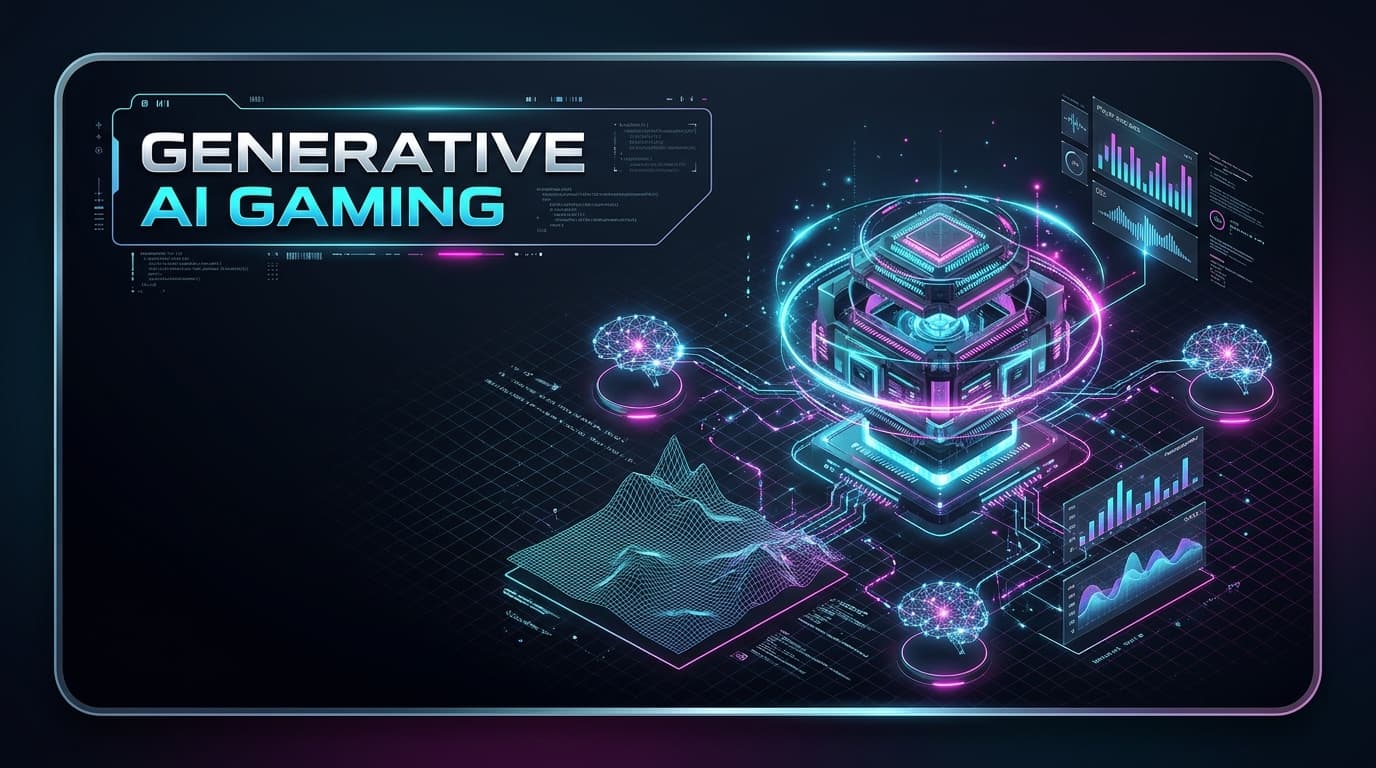
The gaming world is going through a big shift thanks to generative AI. From the way games are built to how players experience them, AI has quickly become part of the process. Recent reports show that 97% of developers see its impact and 90% are already using it in different areas of game development. It’s clear that AI is no longer just an idea for the future, it’s happening right now.
Generative AI in Today’s Game Development
AI tools are now part of everyday workflows in game studios. Developers use them to:
Play-test games and catch bugs or imbalances.
Localise games into different languages for global players.
Generate code and scripts to save time on routine tasks.
With these tasks handled more efficiently, development teams can focus more energy on creativity and innovation. Many studios are also turning to digital services to integrate AI into their pipelines, making collaboration smoother.
Smarter NPCs and AI Agents
NPCs (Non-Playable Characters) are a major part of gameplay, and AI is making them more believable than ever. Instead of repeating the same patterns, NPCs can now show more realistic behaviors, emotions, and reactions. AI-driven agents can also change the difficulty of a game in real time, making the experience unique for every player. This leads to more engaging gameplay and richer storytelling.
Personalised Player Experiences
Generative AI also helps make games feel more personal.
Game environments can shift based on player choices.
Challenges can adjust to match a player’s skills.
Analytics tools track how someone plays and adapt quests, rewards, or interactions accordingly.
This means every player gets a slightly different experience, keeping the game fresh and enjoyable. The digital transformation of player experiences is one of the most exciting outcomes of AI.
Behind the Scenes: AI for Developers
AI is not only improving what players see, it’s changing how development services are delivered:
Level design automation speeds up the creation of game worlds.
AI-assisted animation makes characters move more smoothly.
Dialogue generation adds variety and depth to in-game conversations.
With AI helping in these areas, developers spend less time on repetitive tasks and more time on making their games creative and fun.
Challenges of Integrating AI in Gaming
Even with all its benefits, AI also brings challenges:
Measuring return on investment can be tricky.
High costs make it harder for smaller studios to adopt.
Privacy concerns arise when player data is used to shape experiences.
To truly succeed, studios may need support from digital services providers who can reduce costs and make integration easier.
The Business Impact of AI in Gaming
AI is reshaping not just games, but also the business side of the industry:
Development costs are reduced by automating time-consuming tasks.
New business models are emerging, such as personalised in-game items.
Faster release times help studios bring their games to players more quickly.
This shows how AI, combined with strong digital services, can be a smart investment for companies that want to stay competitive.
The Future of AI in Gaming (Next 3 Years)
Looking ahead, AI is expected to bring even more changes:
Smarter game worlds that evolve with each player’s journey.
Collaboration between players and AI, where gamers can help design characters or levels.
Consistency across platforms, making it easier to move between consoles, PC, or mobile.
Over the next three years, AI and digital game development services could completely change what games look like and how we play them.
Conclusion: A New Era for Game Development
Generative AI is quickly becoming a key part of the gaming industry. While issues like costs and privacy still need to be addressed, the opportunities are huge. From smarter NPCs to personalized gameplay, AI is opening doors to experiences that were once impossible. The future of gaming looks more immersive, interactive, and exciting than ever before with development and digital services playing a big role in making it happen.
FAQs
Q1. What is generative AI in gaming?
It’s the use of AI to create content like characters, dialogue, levels, and gameplay that feels more dynamic and realistic.
Q2. How are developers using AI today?
They use it for play-testing, localisation, code generation, scripting, dialogue, and analysing player behavior. Many rely on digital services to support these processes.
Q3. How does AI improve NPC behavior?
AI gives NPCs more realistic actions and reactions, making them feel less predictable.
Q4. What challenges come with AI in gaming?
The main challenges are high costs, measuring results, and concerns about data privacy. Support from AI-driven development services can help ease these barriers.
Q5. What’s the future of AI in gaming?
We’ll see smarter game worlds, more player-AI collaboration, and faster, cheaper development, supported by digital services.
Get in Touch With Us!
Let us assist you in finding practical opportunities among challenges and realizing your dreams.
linkedin.com/in/decimal-solution — LinkedIn
thedecimalsolution@gmail.com — Email




 HealthTech & Web Applications