 Tech in Law
Decimal Solution · Oct 28, 2026
Is Your Law Firm Really Secure Without a Client Portal?
Learn how secure client portals help law firms protect sensitive data, improve communication, and build stronger client relationships.
Read article



Enterprise Software & ERP Implementation
Talha Atiq · October 21, 2026
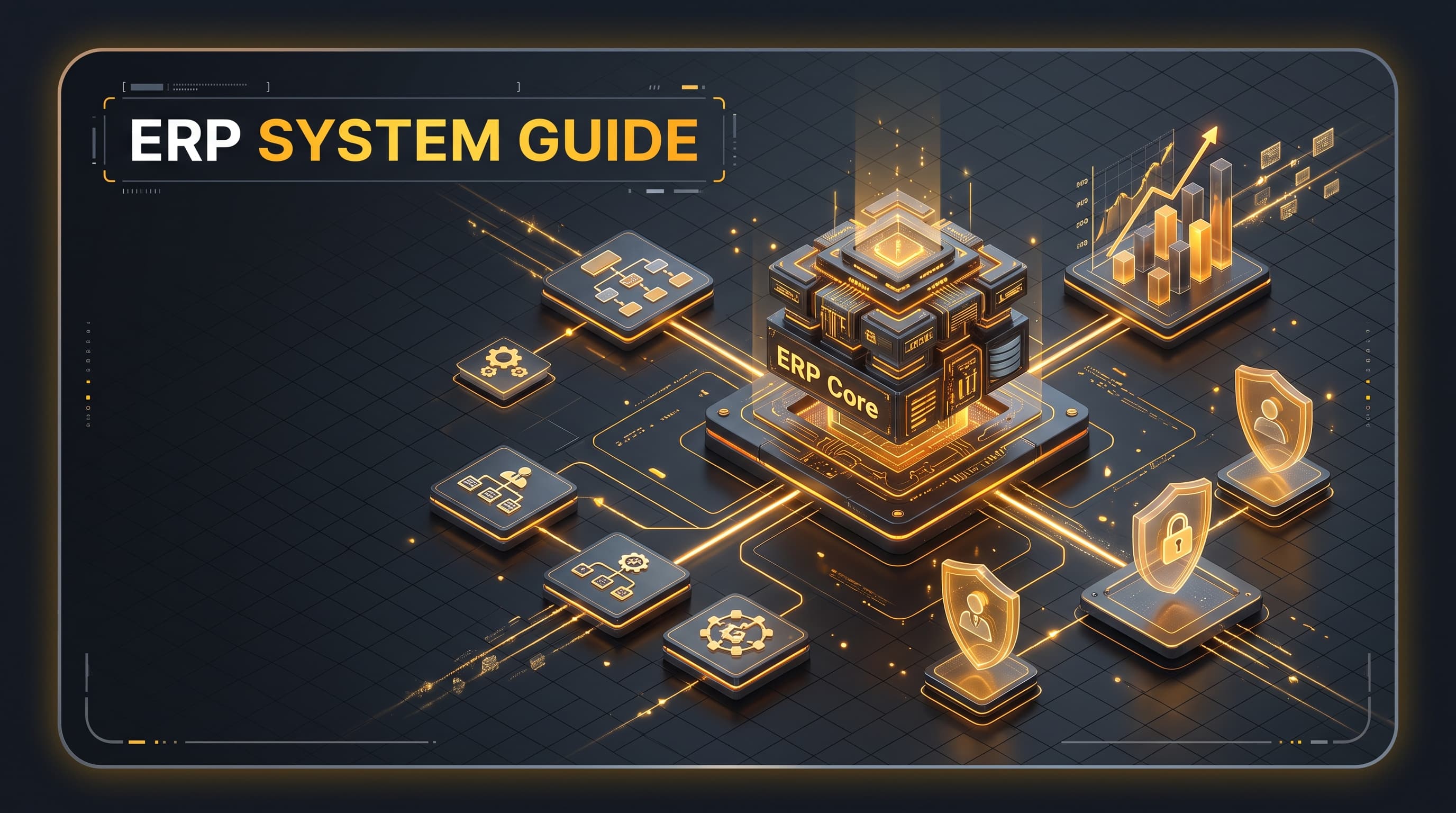
In today's busy business world, companies are always looking for ways to get things done faster, cheaper, and better. One of the best ways to reach these goals is to set up ERP system implementation. But what does ERP mean?
An Enterprise Resource Planning (ERP) system is a single piece of software that helps a company do things like speak with workers, keep track of clients, and handle money. It costs a lot to run an ERP system, but if you do it right, it can be very helpful for your business.
Your ERP system could make your employees unhappy, cost you money, or even ruin a project if you don't take care of it properly. Set up an ERP system? Read this blog to learn the key steps in ERP system implementation, the most important things / c, and the best ways to make the move go smoothly.
Identifying Business Needs & Goals
Businesses need to know what they want to achieve and where they are having trouble before they choose an ERP system. They want to go above and beyond what is asked of them. Will it help HR do their job better, help them keep track of things better, or make financial records better?
How to Choose the Best ERP System
Each ERP system is different from the others. They should first figure out what they need and then look for a program that fits the type of business, its size, and its growth goals. Thought about:
Scalability — Are you adding more to your ERP system?
Customization — How well do the different ways you do things work together?
Integration — Do the tools we already have really work well with this one?
Mapping Business Process
If a business wants to find ways to improve and speed up its current processes, it should map them out before deciding how to set up its ERP system. After setting up the ERP, this step makes sure it works for the business.
Customizing ERP to Align with Workflow
There are some basic parts of many ERP systems that most businesses will need to change. Here's where you can put:
Creating Custom Dashboards
Automated Reptitive Tasks
Configuring Role-Based Access for Security
Transfering Data from Legacy System
Moving data from old systems to a new ERP is one of the most important and hard things that can be done. Data needs to be detailed, cleaned, and checked to make sure there are no mistakes before it is sent.
Seamless Integration with Existing Software
Groups use more than one piece of software most of the time. So that everything works well, the ERP needs to be able to connect to tools like CRM, e-commerce platforms, and payment systems.
Importance of Employee Training
People who work for a business but don't know how to use their most advanced ERP system will not be useful. The new method is taught in full so that people who use it can do it without any problems.
Strategies to Improve User Engagement
Conduct hands-on training session
Offer share help files / documentation and video tutorials
Provide ongoing support & feedback channels
Putting Trial Runs & Fixing Bugs
Before putting the ERP system to use, companies should try it thoroughly to find bugs and make sure everything works as planned. These things need to be checked:
Unit Testing — testing individual components
Integration Testing — ensuring all system works together
User Acceptance Testing (UAT) — involves actual employees testing
Rolling out the system: Phased vs Full Deployment
The parts in an ERP system are spread out one after the other. Choose between:
Phase Implementation — Rolling out the ERP system module by module
Big Band Implementation — Implementing the entire system at once
Each approach has pros and cons, but phases implementation reduces risks and minimize business disruption.
If there isn't a clear plan, ERP projects might fail because the system might not work for the company. A business should have clear goals, KPIs, and road plans before it starts.
We don't know why the workers don't like the new way of doing things. To get past barriers, try these things
Staff are part of the process from the beginning.
Provide proper training & ongoing support
Communicating the benefits of new ERP
It's impossible to do things well when your information is a mess. Make sure the data is right before they migrate, and get rid of any copies.
Many ERP projects go over budget because of extra costs that weren't planned for, such as
Customization Expenses
Training & Support Fees
Hardware and Infrastructure Upgrade
Businesses need to make smart budgets and plans if they don't want projects to cost more than they thought.
Picking the right ERP company is very important. Once a business checks its sources, it should do these things:
Industry Experience
Customer Support & Training Options
Scalability & Long-Term Viability
Make sure that the rules and standards you set are fair for everyone. Take things one step at a time and watch how things go.
Things need to keep getting better, not just accept ERP. It's very important that a method works well.
Bring in important people to help you make a choice so that everyone can share their thoughts and ideas.
When a company uses an ERP system first, things run more quickly and the business grows. Still, if you want to be successful, you need to plan well, have good employees, know how to handle data well, and pick the right ERP company.
The best way for businesses to protect their ERP investments and make sure they have long-term success is to follow best practices and stay away from common mistakes.
Are you ready for your business to make an ERP change? Discover how Decimal Solution can help you decide which choice is best for you!
1. How long can an ERP system implementation takes place?
The time depend on how big, difficult, and unique the business is. A lot of sets last between six months and two years.
2. What are the biggest challenges in a ERP implementation?
Choosing the wrong service, going over budget, staff pushback, and fears about moving data are all things that can go wrong.
3. How can businesses be sure their ERP will work?
They can get more people to use their products if they teach them well, involve staff early on, and always be there to help.
4. How much does an ERP system cost?
The price depends on how big the job is, what kind of software is used, and how much you need to change it. It could be tens of thousands of dollars or really big money.
5. Could little companies use ERP systems?
ERP systems can be used in the cloud, can be expanded, and are cheap. These options are mostly made for small businesses.
Focusing in custom software development, ERP systems, CLMS, CRMS, and AI-powered solutions, Decimal Solution is Businesses trust us for AI-driven invention for the following reasons:
Custom AI Solutions — We fit for your specific business requirements artificial intelligence solutions.
Our team makes sure your present systems easily incorporate.
Compliance and Data Security — First concern is data security following industry best practices.
We promise ideal functioning of your AI solutions by means of 24/7 support and maintenance.
Get in Touch With Us!
Let us assist you to find practical opportunities among challenges and realize your dreams.
linkedin.com/in/decimal-solution — LinkedIn
decimalsolution.com/ — Website
thedecimalsolution@gmail.com — Email
Tech in LawDecimal Solution · Oct 28, 2026
Learn how secure client portals help law firms protect sensitive data, improve communication, and build stronger client relationships.
Read article Tech
Decimal Solution · Oct 28, 2026
Explore how Cursor 2.0 and its Composer model revolutionize AI coding through multi-agent collaboration and faster intelligent development.
Read article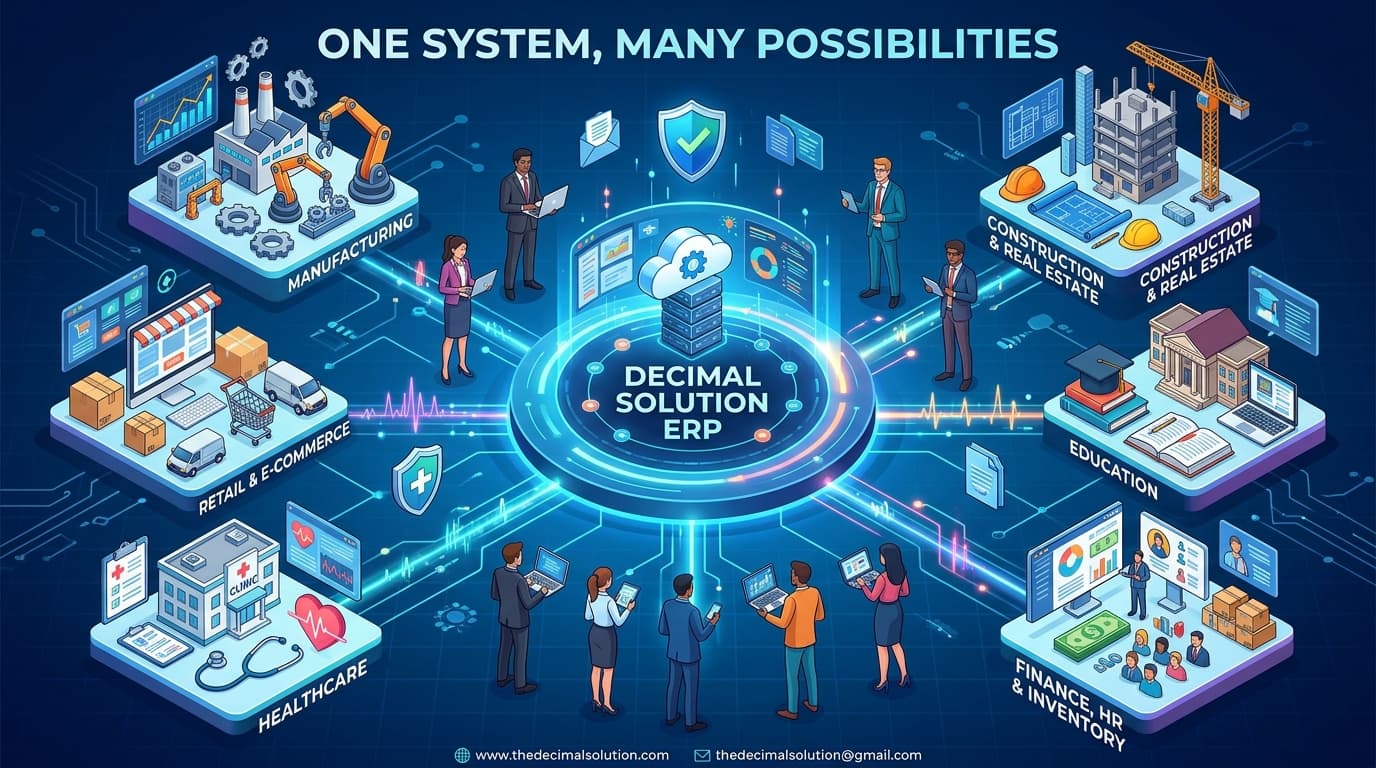 ERP Solutions
Decimal Solution · Oct 28, 2026
See how Decimal Solution’s ERP helps industries manage work smoothly by simplifying, speeding up, and connecting everyday business tasks.
Read article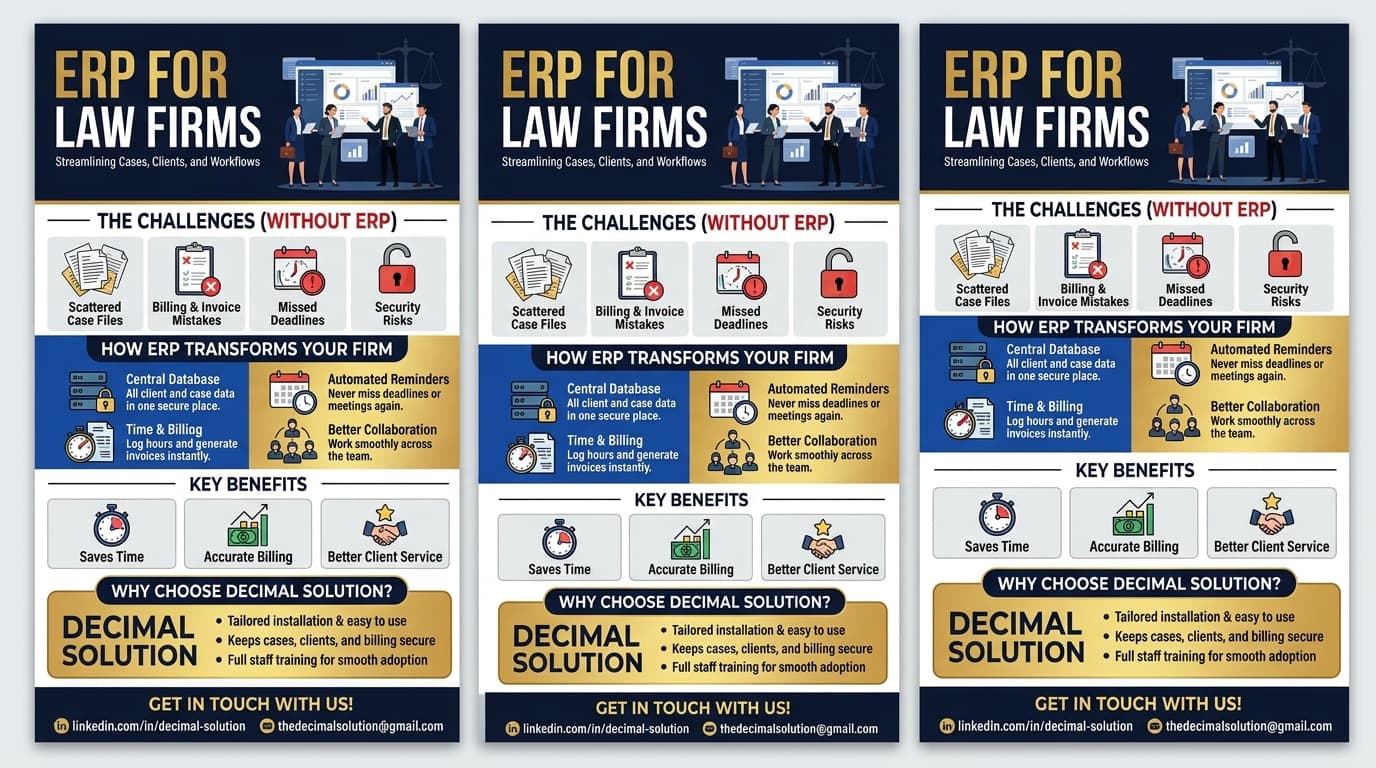 ERP Solutions
Decimal Solution · Oct 28, 2026
Learn how ERP helps law firms manage cases, clients, and documents more efficiently, saving time and improving client satisfaction.
Read articleLet's Build
From concept to launch, we handle every layer of your product. Tell us what you're building.