 Tech in Law
Decimal Solution · Oct 28, 2026
Is Your Law Firm Really Secure Without a Client Portal?
Learn how secure client portals help law firms protect sensitive data, improve communication, and build stronger client relationships.
Read article



Tech
Decimal Solution · October 28, 2026
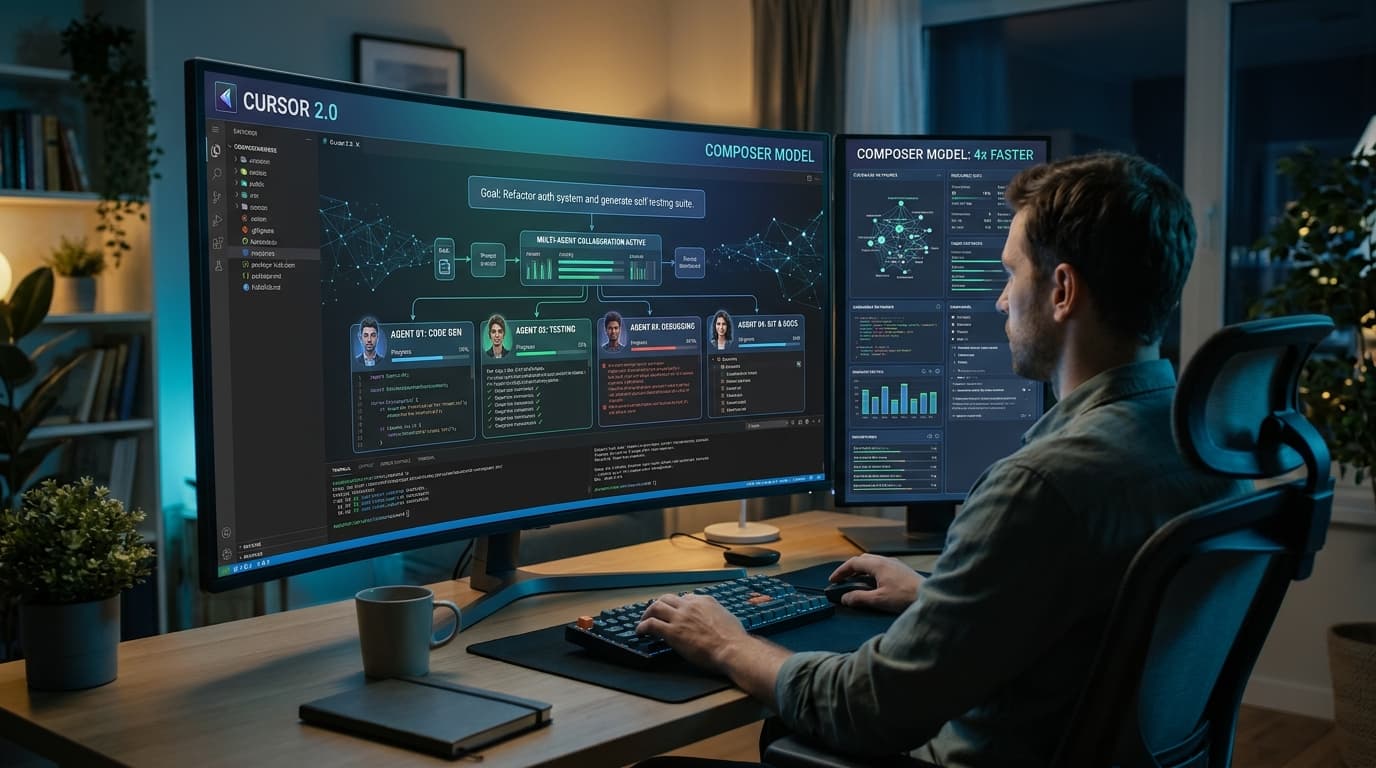
Cursor 2.0 is setting a new standard in AI-powered software development. Instead of merely predicting code completions like traditional assistants, it introduces an entirely new paradigm: multi-agent AI coding. This means developers can now issue objectives and watch multiple AI agents collaborate to complete complex coding tasks. Powered by the new Composer model, Cursor 2.0 delivers unprecedented speed, context understanding, and workflow automation.
Cursor’s evolution transforms it from a supportive assistant to an autonomous AI coding environment, where each agent acts like a specialized developer handling code generation, debugging, and testing in parallel.
At the heart of Cursor 2.0 lies the Composer model, a proprietary AI engine designed for low latency and high precision. It is claimed to operate four times faster than comparable systems while maintaining deep comprehension of extensive codebases.
The Composer model processes context across entire repositories, allowing it to identify dependencies, restructure complex functions, and even refactor outdated segments with remarkable fluency. Its performance is optimized for agentic collaboration, enabling multiple AI workers to share understanding and communicate effectively throughout a project’s lifecycle.
Cursor 2.0 introduces a multi-agent system where each AI operates independently yet cohesively. Developers provide a project-level prompt or goal, and agents divide the work intelligently. Some agents handle code writing, others test functionality, while another group focuses on documentation or optimization.
Each agent works within its isolated git worktree or remote machine, ensuring stability and preventing conflicts. The system then reviews multiple outputs and selects the best version automatically, mimicking a real-world code review among team members.
This approach empowers developers to supervise rather than micromanage their projects, focusing on creative architecture rather than repetitive syntax.
Feature
Description
Developer Advantage
Composer Model
Custom-built AI coding model for speed and context awareness.
Enables rapid, reliable coding with fewer interruptions.
Multi-Agent Collaboration
Multiple AIs working together on parallel tasks.
Boosts productivity through distributed effort.
Goal-Based Programming
Developers describe objectives instead of writing manual steps.
Reduces coding fatigue and streamlines workflows.
Self-Testing Agents
AI tests and validates its code autonomously.
Minimizes debugging time and human review effort.
Version-Safe Git Handling
Isolated worktrees for each agent.
Prevents code conflicts and supports seamless merging.
Semantic Code Understanding
Deep comprehension of large repositories.
Helps with legacy code maintenance and documentation.
Cursor 2.0 fundamentally redefines the developer’s role. Instead of being code authors, developers become project directors guiding intelligent agents. This transition boosts productivity while maintaining control and oversight.
For large organizations, this model can significantly cut project timelines and cost overheads. The multi-agent setup is particularly useful for enterprise-scale applications, where multiple modules must evolve in sync.
Moreover, Cursor’s intuitive interface ensures that developers can still switch to traditional manual editing whenever desired, making it a flexible blend of human creativity and machine precision.
Cursor 2.0 steps into direct competition with tools like GitHub Copilot, Replit AI, and Codeium, but its difference lies in its agentic orchestration. While other platforms assist with completion and context suggestions, Cursor’s system resembles an AI-powered coding studio.
Each agent acts like a virtual colleague, collaborating under your supervision. This cooperative design may become the blueprint for the next generation of development environments, merging AI autonomy with human oversight.
Adopting Cursor 2.0 does come with a learning curve. The shift from direct code manipulation to agent-guided workflows might feel unfamiliar to traditional developers. Additionally, review processes become critical since faster code generation increases the need for rigorous testing.
Another concern is model adaptability. Performance may vary across programming languages and frameworks. Therefore, teams should experiment gradually, beginning with less mission-critical projects to gauge consistency.
Cursor 2.0, powered by its Composer model and multi-agent architecture, represents a monumental step in the evolution of AI coding. By transforming development into a collaborative experience between humans and intelligent agents, Cursor eliminates mundane repetition and fosters creative problem-solving.
In this new coding frontier, developers no longer spend hours perfecting syntax—they orchestrate intelligent systems that build, test, and improve themselves. Cursor 2.0 is more than an upgrade; it is a vision of how software will be built in the era of autonomous intelligence.
Q1: What is the Composer model?
The Composer model is Cursor’s proprietary AI coding engine, designed for fast, context-aware, and multi-agent programming. It enables agents to collaborate efficiently within complex projects.
Q2: How does Cursor’s multi-agent system work?
Cursor deploys multiple AI agents to handle different aspects of coding simultaneously, from writing to testing, then integrates the best outcomes into a unified project.
Q3: Can developers still write code manually?
Yes, developers can switch between agentic and manual modes, giving full flexibility depending on project requirements.
Q4: What are the main advantages of using Cursor 2.0?
Faster coding, parallel task execution, automated testing, reduced manual review, and deeper understanding of large codebases.
Q5: Are there any limitations?
While powerful, Cursor 2.0 requires time to adapt and may perform differently depending on the programming environment and language used.
Get in Touch With Us!
Let us assist you in finding practical opportunities among challenges and realizing your dreams.
linkedin.com/in/decimal-solution — LinkedIn
thedecimalsolution@gmail.com — Email
Tech in LawDecimal Solution · Oct 28, 2026
Learn how secure client portals help law firms protect sensitive data, improve communication, and build stronger client relationships.
Read article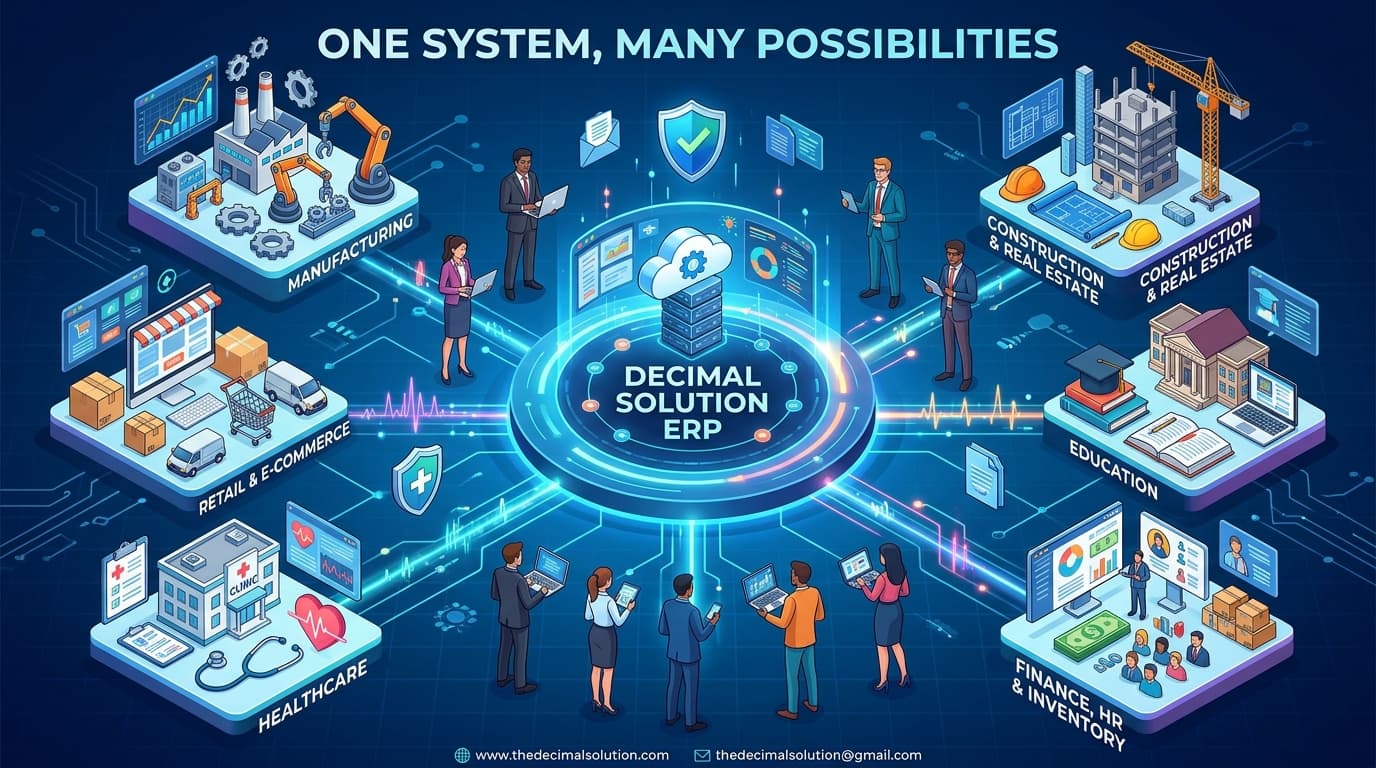 ERP Solutions
Decimal Solution · Oct 28, 2026
See how Decimal Solution’s ERP helps industries manage work smoothly by simplifying, speeding up, and connecting everyday business tasks.
Read article ERP Solutions
Decimal Solution · Oct 28, 2026
Learn how ERP helps law firms manage cases, clients, and documents more efficiently, saving time and improving client satisfaction.
Read article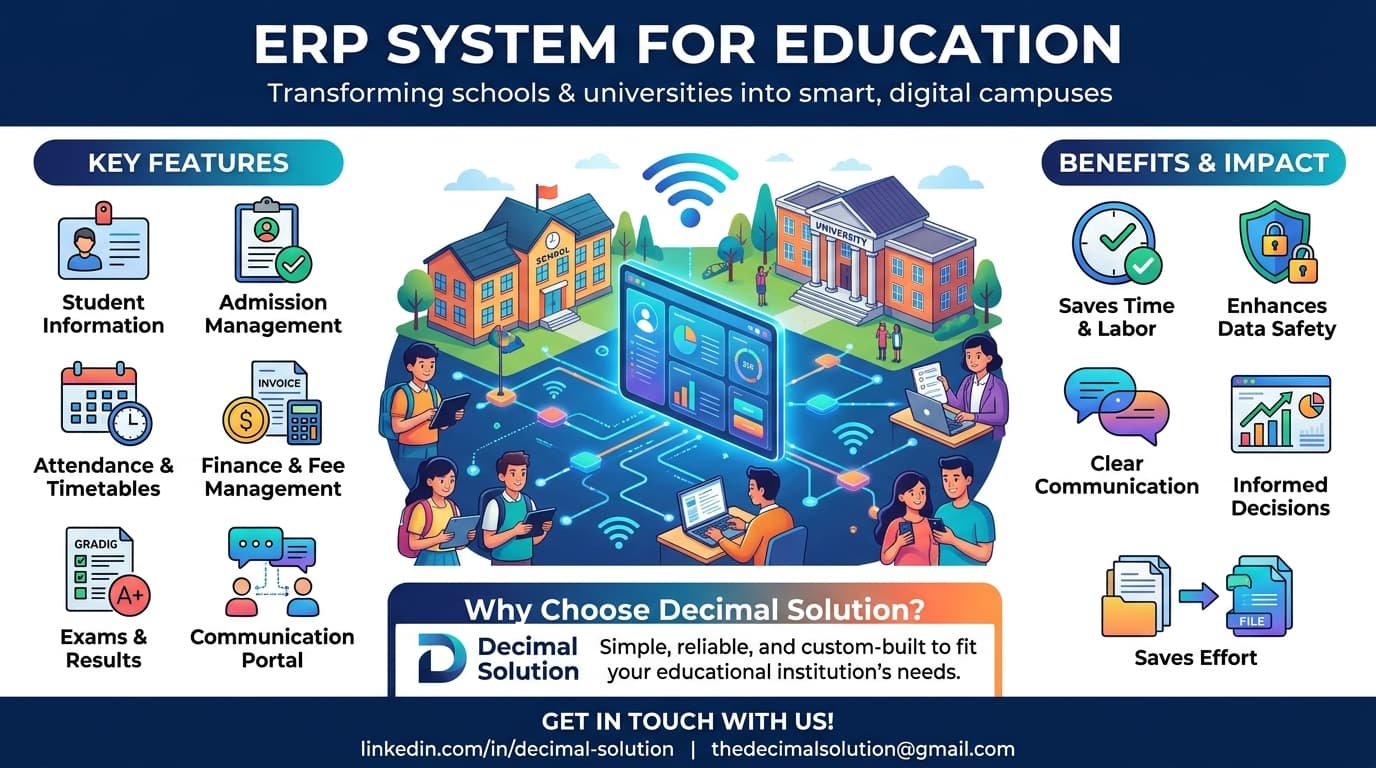 EDTech
Decimal Solution · Oct 28, 2026
Discover how ERP systems help schools and universities save time, streamline tasks, and improve communication for smoother daily operations.
Read articleLet's Build
From concept to launch, we handle every layer of your product. Tell us what you're building.